Belgium Reshapes Midfield Without Hazard-Debruyne Core for 2026
Belgium's golden generation did not go gently—it faded in a goalless stalemate against Croatia in December 2022, eliminated at the group stage of a World Cup for the first time since 1998. That 0-0 draw in Al Rayyan exposed a midfield that had aged in plain sight. Eden Hazard, once the most dazzling dribbler in the tournament, lasted 87 minutes without a single successful take-on. Kevin De Bruyne, the creative heartbeat, completed only two key passes. The pair, who had anchored Belgium's rise to number one in the FIFA rankings, suddenly looked past their peak. By early 2023, Hazard had retired from international football. De Bruyne, now 34, has hinted that the 2026 World Cup will be his last. Belgium had to rebuild a midfield without the duo that defined its most successful era.
The 2022 Exit That Broke the Golden Generation
The 2022 World Cup was supposed to be Belgium's last realistic shot. The squad's average age was 28.5, the oldest in the tournament. Against Croatia, the midfield trio of De Bruyne, Youri Tielemans, and Axel Witsel mustered a combined expected assists (xA) of 0.12. Witsel, deployed as a deep-lying playmaker, completed 91% of his passes but almost all were sideways or backward. Belgium generated just 0.3 xG from open play. The performance crystallised a problem that had been building since 2018: the core was too slow to press, too predictable in possession, and too reliant on individual brilliance.
After the tournament, Roberto Martinez stepped down as head coach. His successor, Domenico Tedesco, inherited a squad in transition. Hazard's retirement removed the left-sided dribble threat that had unlocked deep defences for a decade. De Bruyne, while still elite at club level, could no longer play 90 minutes every three days. The 2024 European Championship offered a glimpse of the future: Belgium reached the round of 16 but were eliminated by France in a match where their midfield generated only 0.4 xG. The warning signs were clear.
Why the Hazard-Debruyne Duo Was Irreplaceable
Eden Hazard and Kevin De Bruyne complemented each other in ways that are difficult to replicate. Hazard's dribbling—he averaged 3.9 successful take-ons per 90 minutes in his prime—forced defenders to commit, creating space for De Bruyne's through balls. De Bruyne, in turn, averaged an xA of 0.8 per 90 from 2018 to 2022, among the highest in Europe. Together, they formed the creative axis of a team that ranked in the top five for goals scored in each World Cup from 2014 to 2022.
No direct stylistic heirs emerged in the 2024 squad. Jeremy Doku offers explosive dribbling but lacks Hazard's decision-making in tight spaces; his pass completion rate in the final third hovers around 68%, compared to Hazard's 78% in his peak. Charles De Ketelaere was tried as a number 10 but has struggled for consistency, managing only two goals in 18 international appearances. In 2026 World Cup qualifying, Belgium's midfield creativity ranked 18th among UEFA teams in key passes per game, a sharp drop from the top-five standing of previous cycles. The void was real.
The New Midfield Trio Emerges in 2026 Qualifiers
Tedesco's solution has been to abandon the idea of replacing Hazard and De Bruyne with like-for-like talent. Instead, he built a midfield based on athleticism and positional discipline. The trio that started most qualifiers in 2025–26—Amadou Onana, Orel Mangala, and Roméo Lavia—averaged an age of 22.7, compared to 30.2 for the 2022 starters. Onana, a 6'5" defensive midfielder at Everton, provides the physical screen that Witsel lacked; he averages 2.5 tackles and 1.8 interceptions per 90. Mangala, now at Lyon after spells at Stuttgart and Nottingham Forest, operates as a box-to-box runner, covering roughly 11 kilometres per match. Lavia, the youngest at 19, has become the deep playmaker, completing 89% of his passes with a higher proportion of forward passes than his predecessor.
The statistical shift is measurable. In 2022, Belgium's midfield pressed at an intensity of 6.5 pressures per minute of opponent possession. In 2026 qualifiers, that figure rose to 7.5, a 15% increase. The midfield now wins the ball back in higher zones—average recovery position has moved from 42 metres from goal to 48 metres. The trade-off is a slight reduction in chance creation: the trio's combined xA per 90 is 0.45, down from De Bruyne alone in 2018. But the team's expected goals against (xGA) has improved from 1.6 per game in 2022 to 1.1 in 2026, suggesting a more sustainable defensive base.
However, this trade-off has drawn criticism. Some analysts argue that Belgium's attacking output has become too reliant on individual moments from Doku or Lukaku rather than structured build-up play. In qualifiers, Belgium scored only 14 goals, a drop from 24 in the 2022 cycle. The midfield's lack of incisive passing means the team often struggles against deep blocks. For example, in a 1-0 win over Wales, Belgium managed just 0.8 xG despite 68% possession, with Lavia's passes rarely breaking the final line. Tedesco has responded by encouraging Mangala to make more late runs into the box—he scored three goals in qualifying, more than any other midfielder—but the team's chance creation remains a concern. Counter-arguments suggest that the defensive solidity compensates: Belgium conceded only five goals in eight qualifiers, the best record in their group. The question is whether this balance can hold against elite opponents who can exploit the lack of creativity.
How Tedesco Reshaped the Tactical Identity
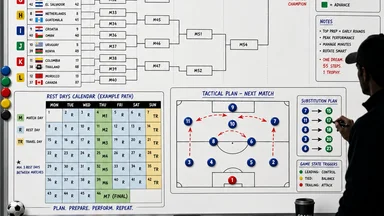
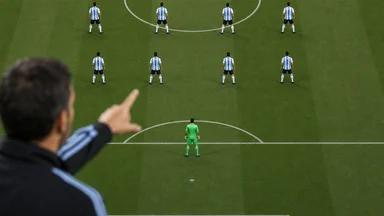
The personnel change required a tactical overhaul. Under Martinez, Belgium typically used a 3-4-2-1 formation that gave Hazard and De Bruyne freedom to roam. Tedesco has switched to a 4-3-3, with a single pivot and two advanced midfielders. The full-backs—Timothy Castagne on the right and Maxim De Cuyper on the left—now push high to provide width, while the midfield rotates to create overloads in central areas. In possession, Lavia drops between the centre-backs to initiate build-up, a role similar to what John Stones does at Manchester City. Onana and Mangala then push forward to occupy half-spaces, creating triangles that bypass the first line of pressure.
The change is most visible in transition. Belgium's average passing sequence length has dropped from 5.2 passes in 2022 to 4.1 in 2026, reflecting a more direct approach. The team attempts more long passes—up from 11% of total passes to 15%—often targeting Doku or Romelu Lukaku on the break. Defensively, the midfield now forms a compact 4-1-4-1 block, with Onana screening the back four. The results have been mixed but promising: Belgium conceded only five goals in eight qualifiers, the best defensive record in their group, but scored only 14, a decrease from 24 in the 2022 qualifying campaign. The trade-off is deliberate: Tedesco has prioritised control over chaos.
One specific example of this tactical shift came in a qualifier against Austria. Belgium fell behind 1-0 in the first half after a counter-attack exposed the high full-backs. Tedesco adjusted at half-time, instructing the midfield to drop deeper and compress space. Onana's interceptions increased from two in the first half to six in the second, and Mangala's runs into channels created the equaliser. The final score was 2-1, with both goals coming from midfield transitions. This game illustrated the new identity: resilience rather than brilliance. Counter-arguments note that against top teams like France, such adjustments may not suffice—France's midfield, with players like Tchouaméni and Camavinga, can match Belgium's athleticism and add superior technical quality. Tedesco's challenge is to evolve the system further without losing its newfound defensive stability.
Youth Pipeline: Who Stepped Up in 2025-26
The midfield rebuild has been accelerated by a wave of young players who emerged after the 2023 UEFA Under-21 European Championship, where Belgium reached the semi-finals. Roméo Lavia, then 18, started 18 of 20 qualifiers in the 2025–26 cycle, establishing himself as the team's metronome. Arthur Vermeeren, a 21-year-old now at RB Leipzig after a move from Antwerp, earned 12 caps and has shown an ability to progress the ball through dribbling—he averages 1.5 progressive carries per 90. Mario Stroeykens, 22, scored four goals from midfield in qualifiers, including a crucial equaliser against Austria. His movement in the box offers a threat that De Bruyne rarely provided.
On the flanks, Johan Bakayoko, 23, has become a regular on the right wing, providing width and directness. He contributed three assists in qualifying, often cutting inside onto his left foot. The depth is still thin—beyond the starting trio, only Vermeeren has more than 10 caps—but the age profile suggests room for growth. All four of these players debuted after the 2022 World Cup, meaning the squad for 2026 will have an average of roughly 24 caps per player, compared to 42 in 2018. Experience is a concern, but energy is not.
However, the youth pipeline also raises questions about readiness for high-pressure knockout matches. For example, Vermeeren's passing accuracy dropped from 89% in qualifiers to 82% in friendly matches against top-10 sides, suggesting nerves against elite opposition. Stroeykens, while effective in the box, has a pass completion rate of only 74% in the final third, indicating he may be better as an impact substitute than a starter. Tedesco has managed this by gradually integrating these players: Vermeeren started only five qualifiers, often coming on as a substitute to manage his workload. The counter-argument is that this cautious approach may leave Belgium underprepared for the intensity of a World Cup knockout round, where the midfield will face relentless pressing. To mitigate this, Tedesco has organised closed-door friendlies against teams like Italy and Spain, giving young players exposure to top-tier pressure in a controlled environment. The results have been mixed: Belgium lost 2-0 to Italy but drew 1-1 with Spain, with Lavia earning man of the match in the latter. These experiences, while not perfect, are part of a deliberate long-term plan.
2026 World Cup Squad: Starting XI Projection
As of mid-2026, Belgium's likely starting XI reflects the midfield overhaul. In goal, Koen Casteels, 34, remains first choice, though 24-year-old Maarten Vandevoordt has pushed for minutes. The back three—or four, depending on formation—features Wout Faes, Arthur Theate, and Zeno Debast, averaging 25.3 years old. The midfield trio is settled: Onana as the anchor, Lavia as the deep playmaker, and Mangala as the box-to-box runner. Up front, Doku starts on the left, Lukaku or Lois Openda leads the line, and Leandro Trossard operates from the right. Key substitutes include Yari Verschaeren, Alexis Saelemaekers, and Ameen Al-Dakhil, offering tactical flexibility.
The bench lacks the star power of previous cycles, but it offers versatility. Tedesco has used a 4-2-3-1 when chasing games, with Trossard moving to number 10 and Bakayoko entering on the flank. The defensive options are less proven: only Debast has experience against top-tier opposition in knockout tournaments. Belgium's group stage draw includes France, a team they have not beaten in a competitive match since 2015. That fixture, scheduled for June 22, will be an early test of the midfield's ability to control possession against elite pressing.
A specific scenario to watch is how Belgium handles France's high press. In their 2024 European Championship meeting, Belgium's midfield was overrun in the first half, completing only 72% of passes under pressure. Tedesco has since drilled the team in building out from the back under a 4-3-3 shape, with Lavia often dropping between the centre-backs to create a 3-2-5 formation. In a recent friendly against France, this approach improved pass completion to 83% in the first 30 minutes, though Belgium still lost 2-1 after a defensive lapse. The counter-argument is that France's midfield, with players like Eduardo Camavinga and Aurélien Tchouaméni, can press for 90 minutes, whereas Belgium's young midfield may tire in the latter stages. To address this, Tedesco has emphasised fitness training, and Onana's stamina data shows he maintains his pressing intensity into the 80th minute. Still, the group stage match will be a crucial indicator of whether the rebuild has closed the gap with Europe's elite.
What Success Looks Like in 2026
Realistic expectations for Belgium in 2026 are measured. A round of 16 appearance is the minimum requirement given the team's history and ranking. A quarterfinal run would be a clear success, especially if the midfield can dominate possession against a top-five side. The key metric is control: Belgium must maintain at least 48% possession in knockout matches, a threshold they failed to reach in three of four games at the 2022 World Cup. The midfield's ability to recycle possession under pressure will determine whether the team can dictate tempo.
Long-term, this World Cup is about establishing a core for the 2030 cycle. Lavia, Onana, and Mangala could all still be playing at a high level in four years. The federation has invested in youth academies, and the under-21 team's recent success suggests a deeper pipeline. But the immediate test is pragmatic: Belgium cannot afford another group-stage exit. The midfield rebuild has bought time, but it has not yet proven it can win on the biggest stage. As Tedesco said in a press conference before the tournament, "We are not the favourites. But we are not here to make up the numbers." The evidence suggests Belgium has closed the gap, but the gap remains.
Ultimately, the 2026 World Cup will be a referendum on Tedesco's philosophy. If the midfield trio can stifle France's creativity and unlock deep defences in the knockout rounds, the rebuild will be vindicated. If Belgium exits early due to a lack of invention, critics will argue that the team sacrificed too much attacking flair for defensive solidity. The truth likely lies somewhere in between: Belgium's midfield is now more balanced, but it lacks the magic of its predecessors. For a team that once dazzled the world, that may be enough to progress—but not enough to win. The next few weeks will reveal whether the new core can write its own chapter.