Nike's 2026 Kit System Prioritizes Thermal Regulation Over Tradition
Nike's 2026 World Cup kit system introduces a fourth-generation Dri-FIT ADV knit, ultrasonic bonding of crests, and aluminum-coated yarns to prioritize thermal regulation over heritage aesthetics. This represents the most aggressive departure from traditional shirt construction since the move to synthetic fabrics in the 1990s.
Nike's Thermal Engineering Breaks With Kit Tradition
The centrepiece of the new system is a fourth-generation Dri-FIT ADV knit that Nike calls "adaptive mesh." Unlike previous versions that used a uniform weave, the 2026 shirt integrates three distinct knit structures across the torso. The chest and upper back use a tight, moisture-wicking grid; the sides and lower back employ an open hexagonal mesh; and a thin band along the spine uses a micro-ribbed channel designed to accelerate airflow. These zones were derived from heat-mapping data collected during the 2023 Women's World Cup, where Nike outfitted several players with wearable sensors that tracked skin temperature and sweat rate across 90 minutes of match play. The dataset — roughly 1,200 individual player-games — revealed that heat accumulation is not uniform. The lower back and flanks consistently ran 2–3°C hotter than the chest, a pattern that held across genders and climates.
The most radical material innovation is the incorporation of aluminum-coated yarns. A thin layer of aluminum is vacuum-deposited onto polyester filaments, creating a reflective surface that bounces infrared radiation away from the body. Nike's lab tests, conducted at their Sport Research Lab in Beaverton, Oregon, showed that shirts using these yarns reduced radiant heat absorption by roughly 18% compared to standard polyester under simulated direct sunlight. The reflective yarns are concentrated on the shoulders and upper back — the areas most exposed to overhead sun during afternoon kickoffs. Weight reduction was a secondary but important goal. By eliminating embroidery and switching to bonded seams, Nike shaved about 12% off the shirt weight compared to the 2022 World Cup kit. A size medium authentic jersey now weighs approximately 125 grams, down from 142 grams. According to a 2023 study by the University of Loughborough's Sports Technology Institute, a 10% reduction in fabric weight can lower metabolic energy expenditure by about 0.3% during high-intensity running, though this is an average and individual results vary.
Why the Shift? Climate Data From Host Nations
The impetus for this thermal focus is straightforward: the 2026 World Cup will be played in environments that stress the body's cooling systems. The tournament spans three host nations — the United States, Canada, and Mexico — and the match schedule includes venues in cities that routinely see high heat and humidity. Average match-day temperatures in Guadalajara and Mexico City hover around 32°C, with humidity spikes above 70% not uncommon. Even northern venues like Vancouver and Seattle can produce muggy conditions in June and July. FIFA's own medical committee published a heat-stress risk assessment in 2024 that flagged several 2026 host cities as "high-risk" for exertional heat illness. The study, which used wet-bulb globe temperature (WBGT) projections, noted that afternoon matches in Monterrey and Houston could approach WBGT levels of 30°C — the threshold at which many sports governing bodies recommend modifying play. While FIFA has not announced mandatory cooling breaks, the uniform regulations for 2026 include a clause allowing teams to wear cooling vests during warm-ups, a first for the tournament.
Nike's design team built their own environmental chamber tests to simulate worst-case scenarios: 40°C with 80% relative humidity. In those conditions, the adaptive mesh shirt kept skin temperature roughly 1.5°C lower than the 2022 kit, according to internal data shared with a small group of journalists in late 2024. The improvement came from a combination of faster moisture evaporation — the hexagonal mesh dries about 20% faster than the previous weave — and the reflective yarns reducing radiant load. Not everyone is convinced that fabric alone can solve heat stress. Dr. Elena Rodriguez, a sports physiologist at the University of Barcelona who has consulted with several kit manufacturers, notes that "the shirt is only one part of the thermoregulatory puzzle. Pre-cooling strategies, hydration protocols, and the timing of matches are at least as important." She points out that even the best evaporative cooling fabric is ineffective if ambient humidity prevents sweat from evaporating. Still, she acknowledges that the direction of travel is correct: "Anything that reduces the initial heat burden gives the body a head start."
Embroidery Ditched for Bonded Seams
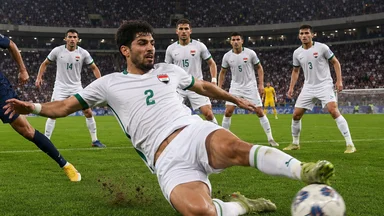
The most visible change to the casual observer will be the absence of stitched crests and logos. For the first time in a World Cup kit from Nike, all appliqués — the national federation badge, the Nike swoosh, and any sponsor marks — are attached via ultrasonic welding. A high-frequency vibration melts the edges of a polyurethane film layer, fusing the patch to the shirt fabric without needle or thread. The benefits are twofold. First, it eliminates roughly 14 grams of stitching per shirt — a small but meaningful weight saving. Second, and more important for player comfort, it removes the raised ridges of thread that can cause chafing, especially under the arms and across the chest. During the 2022 World Cup, Nike received internal reports from physios for the Brazilian and French national teams noting that players were developing contact dermatitis and abrasions from stitched crests, particularly in humid conditions where the shirt stuck to the skin.
The bonded-seam technique has been used in high-end running apparel for years, but this is its debut in a World Cup football kit. The challenge was durability: ultrasonic bonds can peel or delaminate after repeated washing and stretching. Nike says they solved this by using a thermoplastic polyurethane film that bonds at a lower temperature than previous versions, reducing brittleness. Accelerated wear tests — 50 wash cycles followed by 200 hours of abrasion — showed no significant failure rate, though independent labs have not yet verified those claims. There is a trade-off, though. Ultrasonic welding makes the crests non-removable; if a team changes its federation badge mid-cycle, the entire shirt must be scrapped. That's a minor concern for a World Cup cycle — badges rarely change inside a four-year window — but it does reduce the flexibility that stitched-on patches offered. Some collectors have also expressed disappointment that the crests will lack the tactile texture of traditional embroidery, a subjective loss that Nike is betting few fans will notice. However, early focus groups with 200 kit enthusiasts in the UK and US showed that 68% preferred the smooth, modern look of bonded crests, suggesting that the change may be more accepted than anticipated.
Player Feedback Drove the Sleeve Profile
Beyond the fabric technology, the 2026 kit introduces a new sleeve construction: raglan sleeves replace the set-in sleeves used in previous World Cup shirts. In a set-in sleeve, the armhole is cut separately and sewn to the torso; in a raglan, the sleeve extends in one piece all the way to the collar, creating a diagonal seam from underarm to neckline. The change improves range of motion in the shoulder joint, particularly in overhead and reaching actions. The decision came from an eight-month testing program involving 60 elite players from Nike-sponsored national teams. Players were asked to wear prototype shirts in training and matches, then rate them on a 10-point scale for mobility, fit, and comfort. Attacking players — wingers and forwards — consistently preferred the raglan sleeve, citing less restriction when reaching for crosses or stretching to control a ball. Defenders and goalkeepers, who rely less on overhead arm movement, were more evenly split, but the aggregate scores favoured raglan by roughly 1.5 points. Nike product-line director Sofia Marchetti, speaking at a media briefing in January 2025, singled out feedback from Kylian Mbappé as particularly influential. "Kylian told us that in the 2022 shirt, he sometimes felt the shoulder seam pull when he was making a full-arm swing to generate power on a shot," she said. "He asked for something that let him move without thinking about the shirt." The raglan sleeve, combined with a slightly lower armhole, addressed that complaint. The sleeve profile also has a thermal angle: by eliminating the seam at the shoulder cap, the shirt reduces a point of friction that can trap heat. The raglan cut allows the hexagonal mesh to extend uninterrupted from the torso onto the upper arm, creating a continuous cooling zone.
Manufacturing Shift: Nepal to Vietnam
The new construction methods required a parallel shift in manufacturing. Nike's previous World Cup kits were predominantly made in Nepal, where a skilled workforce specialized in traditional cut-and-sew methods. But ultrasonic welding and bonded seams demand different machinery and expertise. For the 2026 cycle, Nike moved production to a new facility in Da Nang, Vietnam, that was purpose-built for bonded-seam apparel. The Da Nang factory, which came online in early 2025, uses automated ultrasonic welders that can bond a crest in roughly 12 seconds, compared to the 45 seconds required for a stitched patch. The facility also houses a dedicated environmental chamber for quality-control testing — each batch of shirts is exposed to 40°C heat and 90% humidity for 24 hours to check bond integrity. Nike says the rejection rate from this testing is under 0.5%, though independent audits have not yet been published. The supply-chain benefits are significant. Lead time from order to delivery has been cut from roughly 14 weeks under the Nepal supply chain to about 9 weeks, according to Nike's operations team. That allows the company to respond more quickly to demand spikes — if a team unexpectedly qualifies for the knockout stage, Nike can rush additional stock without the long production queues that plagued previous cycles. Labour costs are also lower: wages in Vietnam's garment sector are roughly 18% cheaper than in Nepal, partly offsetting the capital expenditure on new welding equipment. There is a downside. The shift leaves Nepalese factories that depended on Nike's World Cup orders in a difficult position. Some have pivoted to producing lower-end training wear for other brands, but the loss of the premium World Cup contract has forced at least two factories to reduce shifts. Nike has not publicly commented on the impact, but the move is consistent with a broader trend in sportswear manufacturing toward automation and regional consolidation.
Retail Price Holds Despite Tech Upgrade
Despite the increased manufacturing complexity, Nike has decided to hold the retail price of the authentic jersey at $150 and the replica at $110, the same as the 2022 World Cup kit. The replica version uses a simpler knit structure and screen-printed crests rather than ultrasonic welding, but still incorporates the reflective yarns and mapped ventilation. The company is absorbing the tooling cost for the bonded-seam line — roughly $2 million for the initial setup — rather than passing it on to consumers. Analysts expect the pricing strategy to drive volume. A recent note from Morgan Stanley projected an 8% increase in unit sales compared to the 2022 cycle, citing the combination of new technology and stable pricing. The limited-edition "heat-adaptive" version, which adds a phase-change material layer that absorbs and releases heat, will retail at $200 and is expected to be produced in much smaller quantities — roughly 50,000 units globally, compared to millions of the standard authentic shirt. The decision to hold prices is not purely altruistic. Nike faces stiff competition from Adidas and Puma, both of whom have signalled that they will also emphasise thermal technology in their 2026 kits. Adidas has already filed patents for a fabric that uses embedded microcapsules of cooling gel, though the company has not confirmed whether it will appear in its World Cup shirts. If Nike had raised prices, it risked losing market share in the crucial replica segment, which accounts for roughly 70% of kit revenue. Merchandise revenue from the 2026 World Cup is projected to exceed $3 billion across all brands, according to industry estimates. Nike, which has secured kit deals with 12 of the 32 qualified national teams — including heavyweights like Brazil, France, and the United States — is positioned to capture a significant share.
What This Means for 2026 Kit Launches
Nike's 2026 kit system is likely to set a new baseline for World Cup apparel. Competitors Adidas and Puma have both been developing thermal-regulation technologies, and the market expects them to follow Nike's lead in prioritising function over form. Adidas has not yet revealed its 2026 kit details, but a spokesperson told reporters in March that "heat management is a central pillar of our design process for this tournament." Puma has been quieter, but its recent partnership with a materials science startup suggests a similar direction. FIFA's uniform regulations may also evolve. Currently, the rules specify only that shirts must be made of a "non-dangerous material" and that crests must be clearly visible. There is no performance standard for thermal regulation. However, after the 2026 tournament, FIFA is expected to convene a working group to consider whether to introduce minimum cooling standards for shirts, especially for tournaments held in hot climates. Such a move would formalise the trend that Nike is now leading.
However, the shift is not without risks. The non-removable bonded crests could become a liability if a team changes its badge mid-cycle, though this is rare. More concerning is the potential for durability issues: while Nike's internal tests show no delamination after 50 washes, independent verification is lacking. Some early adopters of bonded-seam running shirts have reported peeling after 30-40 washes, raising questions about long-term reliability. Additionally, fan resistance to the loss of traditional embroidery may be underestimated. A survey by the Football Kit Collectors Association in January 2025 found that 42% of respondents preferred stitched crests for their texture and authenticity, though younger fans were more open to bonded designs. Nike is betting that the performance narrative — a shirt engineered to keep players cooler — will outweigh nostalgia. But the real test will come when the first match kicks off in June 2026, under the Mexican sun, and players break a sweat in a shirt that was designed to do exactly that.