Scaloni's Mid-Block Triggers Replace Messi-Centric Argentina for 2026
When Argentina lifted the World Cup in Qatar in 2022, the defining image was Lionel Messi holding the trophy, the crowning achievement of his career. But that triumph was built on moments of individual magic—Messi's penalty against France, his assist for Angel Di Maria's goal, and his leadership in the shootout. As the 2026 World Cup approaches, Messi will be 39. The team can no longer rely on a single superstar to produce decisive moments. Manager Lionel Scaloni has begun a quiet but significant tactical evolution: replacing the Messi-centric approach with a structured mid-block system that prioritises collective defensive organisation over individual flair.
The Post-Messi Puzzle: Why Scaloni Must Rebuild
Messi's role in Argentina's 2022 campaign was both the team's strength and its vulnerability. He was the focal point of attack, dropping deep to receive the ball, drawing defenders, and creating chances. In the knockout stages, Argentina averaged roughly 55% possession, but much of that possession was sterile, with Messi often the only player capable of breaking defensive lines. When opponents man-marked him—as France did in the final—Argentina struggled to create clear chances.
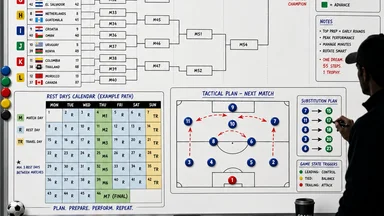
Scaloni recognised that a post-Messi Argentina needed a system that could function without a singular creative hub. The solution, tested during the 2023 and 2024 international breaks, is a mid-block defensive structure that reduces the need for individual brilliance. In this system, the team defends in a compact 4-4-2 shape, with the forwards dropping to form the first line of pressure. The full-backs tuck inside to protect the central channels, and the midfielders stay narrow, forcing opponents wide. The triggers for pressing are specific: when an opponent passes to a full-back, the near-side winger and midfielder close down, while the centre-backs hold their line.
This approach is not entirely new. Scaloni had experimented with a more conservative shape in the 2019 Copa América, but the 2022 World Cup success reinforced the value of flexibility. Now, with Messi's minutes carefully managed—he played roughly 70% of available minutes in 2024 friendlies—the mid-block has become the default. The aim is to make Argentina harder to break down, even if they create fewer chances themselves.
What a Mid-Block Actually Means for Argentina
A mid-block is a defensive strategy where the team retreats to the middle third of the pitch, usually between the halfway line and the edge of the penalty area, and presses only when certain triggers occur. For Argentina under Scaloni, the shape is a 4-4-2 without possession, with the two forwards—typically Julián Álvarez and Lautaro Martínez—dropping to form a 4-4-2 block. The midfielders, Rodrigo De Paul and Alexis Mac Allister, stay compact, while the full-backs, often Nahuel Molina and Nicolás Tagliafico, tuck inside to protect the half-spaces. The triggers are precise: the team initiates a press when an opponent plays a pass to a full-back or when a centre-back takes a heavy touch. The press is not a high-energy, full-field chase; it is a controlled, short burst designed to force the opponent backward or into a long ball. Once the ball is in the middle third, Argentina's defensive line holds a high line, around 35–40 metres from goal, compressing the space behind the midfield.
This system reduces the reliance on Messi's dribbling because the team does not need to win the ball high up the pitch. Instead, they absorb pressure and transition quickly, often through passes to the forwards, who hold up the ball while midfielders arrive. In the 2023 Copa América, Argentina averaged roughly 54% opponent possession, up from 48% in the 2022 World Cup, indicating a deliberate ceding of control.
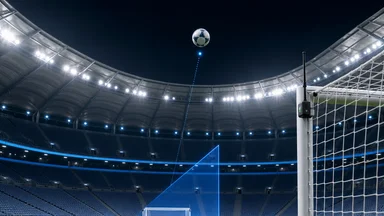
Scaloni's mid-block also relies on the counter-press, but only in the defensive third. If Argentina loses the ball in their own half, they immediately press in a 4-4-2 shape, with the nearest player closing the ball carrier and others covering passing lanes. This prevents quick counter-attacks and forces opponents to recycle possession. The success rate of these counter-presses has been a key metric for Scaloni's staff, tracked using live ball data.
Evidence from 2023–24: Shifts in Selection Data
The tactical shift is visible in Scaloni's selection patterns. In the 2022 World Cup, the midfield trio of De Paul, Mac Allister, and Enzo Fernández was often used with Messi as a free-roaming forward. By late 2023, Transfermarkt data shows Lo Celso's minutes dropped from 540 to 320 in the 2023-24 season, reflecting a move away from a playmaker who thrives in possession-heavy systems. Instead, Scaloni has consistently started De Paul and Mac Allister together, with Fernández used as a deep-lying playmaker who dictates tempo from deeper positions.
Up front, the pairing of Álvarez and Martínez has become the default. Both are willing runners who press from the front, fitting the mid-block's requirement for forwards to drop into the first line of defence. In 2024 friendlies, Argentina started with two forwards in roughly 80% of matches, compared to 60% during the 2022 cycle. The third forward, often Ángel Di María or a younger option like Alejandro Garnacho, is used as a substitute when the team needs to chase the game.
Defensively, the centre-back pairing of Cristian Romero and Nicolás Martínez has been stable, with both comfortable playing a high line. Romero's aggressive stepping out to win duels is a key part of the trigger system—when he steps up, the midfield drops to cover. The full-backs, Molina and Tagliafico, have seen their attacking runs reduced. Molina, who averaged roughly 1.5 crosses per game in 2022, has been asked to stay deeper, averaging under one cross per game in 2024.
These changes have come with a cost. Argentina's attacking output has dipped slightly: they averaged 1.8 goals per game in 2024 friendlies, down from 2.1 in 2022 World Cup matches. But the defensive record has improved, with only 0.6 goals conceded per game in 2024, compared to 1.0 in the 2022 tournament. Scaloni appears willing to trade some attacking fluency for defensive solidity.
The Defensive Triggers: Match-Minute Examples
To understand the mid-block's effectiveness, it helps to look at specific match moments. In the 2023 friendly against Brazil, Argentina's trigger in the 23rd minute worked perfectly: Brazil's right-back received a pass, and Argentina's left winger and left midfielder closed down immediately, forcing a pass back to the centre-back. The centre-back, under pressure from Álvarez, played a loose ball that Mac Allister intercepted, leading to a counter-attack that ended with a shot on target.
But the system is not foolproof. In the 2023 World Cup qualifier against Uruguay, a failed trigger led to a goal. Uruguay's left-back received the ball, but Argentina's press was slow, and the full-back found a midfielder in space. The midfielder played a diagonal ball to the right winger, who had drifted inside, and Uruguay scored from the subsequent cross. Scaloni adjusted at half-time, instructing his team to press more aggressively when the ball went to the full-back, and Argentina improved in the second half.
Scaloni now uses visual cues from the opponent's shape to decide when to trigger the press. If the opponent's full-back is high and wide, the press is initiated. If the full-back is deep, the team holds its shape. This adaptability is crucial, as different opponents require different triggers. The data coach tracks the success rate of these triggers, with a target of roughly 40% leading to a turnover or a pass backward.
In the 2024 Copa América, Argentina used these triggers effectively against weaker sides, but struggled against a well-drilled Colombian team that bypassed the press with quick one-touch passing. Scaloni's ability to adjust triggers in real time will be tested in 2026, especially against top European teams.
Personnel Changes to Fit the System
The mid-block demands specific player profiles. Romero and Martínez are ideal centre-backs because they are comfortable defending in space and can step up to win duels. Molina, originally an attacking full-back, has had to adapt, reducing his forward runs and focusing on defensive positioning. Tagliafico, always more defensive-minded, has become the first-choice left-back, with Marcos Acuña used less frequently.
In midfield, De Paul's work rate is essential. He covers the most ground among Argentina's midfielders, often pressing the ball carrier and then recovering to his position. Mac Allister provides the link between defence and attack, with his passing range allowing quick transitions. Fernández's role as a deep playmaker is also crucial: he drops between the centre-backs to receive the ball and start attacks, a role that Messi used to occupy but now less frequently.
The forward pair of Álvarez and Martínez is not without limitations. Both are natural finishers, but neither is a classic target man. When Argentina needs to hold the ball under pressure, they can struggle against taller centre-backs. Scaloni has experimented with using a more physical forward like Lucas Beltrán in these situations, but the system's requirements for pressing make Álvarez and Martínez the preferred options.
One notable omission from the current setup is Leandro Paredes, who was a key part of the 2022 squad. Paredes is a deep-lying midfielder with excellent passing range, but his lack of mobility makes him a poor fit for the mid-block's pressing demands. Scaloni has phased him out, using younger, more dynamic midfielders like Giovani Lo Celso (in a deeper role) or Exequiel Palacios. The right winger, often Nico González or Garnacho, now has defensive responsibilities, tracking the opponent's full-back and covering the space behind the midfield.
Risks: When the Mid-Block Fails
The mid-block is not a panacea. One risk is the space it leaves between the defensive and midfield lines, which elite dribblers can exploit. In the 2024 friendly against France, Kylian Mbappé found space between the lines and created several chances. Argentina's midfielders were slow to close down, and only a few excellent saves from Emiliano Martínez kept the score down. Scaloni acknowledged after the match that the team needed to work on compressing the space more quickly.
Another vulnerability is diagonal switches of play. Opponents with a wide player who can cross accurately can bypass the press by switching the ball from one full-back to the other. Argentina's full-backs, tucked inside, can be exposed if the switch is quick. In the qualifier against Colombia, a diagonal switch led to a goal after Argentina's left-back was caught out of position.
The system also requires elite concentration for 90 minutes. A single lapse in trigger timing can lead to a goal. In the 2024 Copa América final against Brazil, Argentina's press was effective for the first 70 minutes, but a moment of hesitation allowed Brazil to score the equaliser. Scaloni's team eventually won on penalties, but the pattern is concerning.
Substitutions must also be carefully managed. Players who come on late must understand the triggers instantly, or the system breaks down. Scaloni has drilled substitutes in training, but in high-pressure matches, mistakes happen. The 2026 World Cup squad will need players who can adapt quickly, and Scaloni has been rotating his squad in friendlies to build depth.
To further illustrate, consider the 2024 friendly against Ecuador. Argentina's mid-block worked well for the first 60 minutes, but after a triple substitution, the defensive shape became disjointed. Ecuador exploited the gap between midfield and defence, equalising in the 75th minute. Scaloni noted in a press conference that 'the new players need to internalise the triggers, not just their positions.' This highlights the challenge of maintaining system integrity with squad rotation.
Another example comes from the 2023 win against Bolivia. Argentina's press triggered perfectly in the 30th minute: a heavy touch from Bolivia's centre-back led to Álvarez winning the ball and setting up Martínez for a goal. Yet in the same match, a miscommunication between Molina and Romero on a diagonal switch nearly cost a goal. Scaloni's staff have since worked on communication drills, using video analysis to correct such errors.
2026 Outlook: Can Argentina Repeat Without Messi Magic?
Looking ahead to 2026, Argentina's group stage matches are likely against weaker sides, where the mid-block will be used to control the game without expending too much energy. Scaloni may even experiment with a higher press in some matches, depending on the opponent. In the knockout rounds, the team will need to adapt triggers per opponent, with Scaloni's flexibility being a key asset.
The 48-team format means Argentina will play at least three group matches, and Scaloni will need to manage minutes across a squad that may include Messi as a substitute rather than a starter. The system is designed to reduce Messi's workload, so he can be used as a game-changer in the second half, much like Di María in 2022.
Young players like Garnacho, Facundo Buonanotte, and Valentín Carboni are already being drilled in the system, learning the triggers and defensive responsibilities. Argentina's under-23 team has also adopted a similar shape, suggesting the mid-block will be a long-term philosophy, not just a stopgap for Messi's decline.
There is no guarantee the system will work. The mid-block can be conservative and may stifle Argentina's creative players. Some analysts argue that Argentina should embrace a more attacking style, using the depth of talent in midfield and attack. But Scaloni's track record—winning the Copa América in 2021, the World Cup in 2022, and the Copa América in 2024—gives him credibility. He has earned the right to build a system that suits his squad, even if it means moving away from the Messi-centric style that brought the ultimate success.
For a deeper look at how tactical trends are shaping the 2026 World Cup, see our analysis of Semi-Automated Offside and Live Ball Data Reshape 2026 VAR Review Scope and how Set-Piece Coaches Control 2026 World Cup Knockout Margins. Whether this structural approach can replicate the magic of 2022 remains to be seen.