Warren Zaïre-Emery’s Two-Way Output Anchors France 2026 Midfield Transition
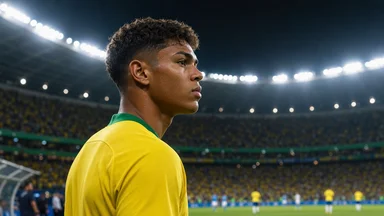
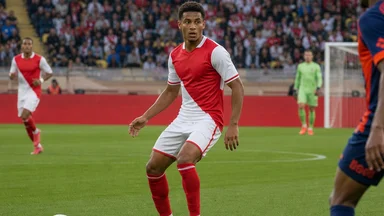
When France take the pitch at the 2026 World Cup, their midfield will look fundamentally different from the one that reached the final in 2022. N’Golo Kanté and Adrien Rabiot are no longer in the squad, and the burden of controlling games falls on a new generation. Among them, one name keeps surfacing in tactical discussions: Warren Zaïre-Emery. At just 20 years old, the Paris Saint-Germain academy product has already logged over 180 minutes of senior qualifying action and is widely expected to start in the tournament. His emergence represents not just a changing of the guard, but a subtle shift in how France approaches the middle third.
Why France’s Midfield Looks Different in 2026
The departure of Kanté and Rabiot leaves a void that cannot be filled by experience alone. Kanté’s relentless covering of ground and Rabiot’s physical presence gave France a blend of defensive security and transitional ballast. In their absence, Aurélien Tchouaméni and Eduardo Camavinga are the expected starters, but a third midfielder is needed to complete the triangle. Zaïre-Emery offers something neither of those two quite provides: a genuine two-way engine that can press high, carry the ball through pressure, and still arrive late in the box.
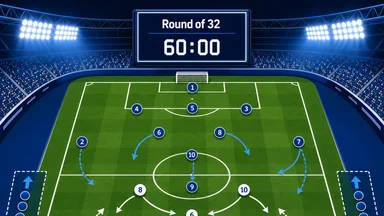
Deschamps has historically valued work rate and tactical discipline over flair. In recent friendlies and qualifiers, he has experimented with a midfield three that allows Tchouaméni to anchor, Camavinga to shuttle, and Zaïre-Emery to roam. This structure frees Antoine Griezmann to drift wide without leaving the center exposed. It also provides cover for Kylian Mbappé’s defensive reluctance, as Zaïre-Emery can drop into a right-sided defensive slot when needed.
The under-21 minutes Zaïre-Emery accumulated during qualifying—roughly 180-plus minutes across multiple fixtures—suggest Deschamps trusts him in competitive settings. Those minutes were not garbage time; they came in matches where France needed to control tempo against disciplined opponents. The coach’s willingness to blood a teenager in meaningful qualifiers signals a long-term investment.
Still, the transition is not seamless. France’s midfield in 2022 was built on compactness and counter-pressing. The new trio is more dynamic but less tested as a unit. Opponents like Austria and the Netherlands, both potential group-stage foes, will probe for gaps in that unfamiliarity. Zaïre-Emery’s ability to read danger and close space quickly will be critical.
The 17-Year-Old Who Outpaced Expectations
Zaïre-Emery’s trajectory accelerated earlier than almost anyone predicted. He made his PSG first-team debut at 16 years and 151 days, becoming the club’s youngest-ever player in a competitive match. By the 2023-24 season, he had established himself as a regular in Ligue 1, posting 2.1 tackles and 1.8 interceptions per 90 minutes—numbers that placed him among the top young midfielders in Europe. His pass completion rate of 91.3% in the Champions League group stage that season was remarkable for a player so young, especially given the high-risk passes he attempted.
Goal contributions followed naturally: four goals and five assists in all competitions, many of them arriving from late runs into the box. He was named in France’s standby list for Euro 2024, a sign that the national team staff already saw him as a potential contributor at senior level. The Euros ultimately came too soon, but the World Cup cycle offered a clearer path.
Compared to other teenage sensations, Zaïre-Emery’s development has been unusually balanced. He is not a pure creator like Pedri was at 18, nor a pure destroyer like a young Kanté. Instead, he combines both profiles. His ability to win the ball in midfield and immediately drive forward with it makes him a rare asset in modern football, where specialization often comes at the expense of versatility.
Some scouts have noted that his physical growth is still ongoing. At roughly 1.78m, he is not imposing, yet his aerial duel win rate of 58% suggests excellent timing and leap. That attribute will be tested against taller midfielders in Group D, but early indicators are promising.
Two-Way Output: The Numbers Behind the Hype
The statistical case for Zaïre-Emery rests on a combination of defensive intensity and progressive ball-carrying. According to FBref data from the 2023-24 season, he averaged 19.7 pressures per 90 minutes, placing him in the top 10% among under-21 midfielders in Europe’s top five leagues. That figure is not just about volume; his pressure success rate—the percentage of pressures that lead to a turnover or a pass backward—is also above average.
On the ball, his 3.2 progressive carries per 90 minutes reflect a willingness to break lines. These carries often start in his own half and end with a forward pass or a shot. His expected assists (xG assisted) of 0.21 per 90 is solid for a box-to-box midfielder, indicating that his final ball is more than just safe. For context, Jude Bellingham’s xG assisted per 90 at the same age was around 0.25, a comparable figure that underscores Zaïre-Emery’s creative potential.
Defensively, his 2.1 tackles and 1.8 interceptions per 90 are backed up by a low foul rate—roughly 0.7 fouls per 90. This discipline means he can disrupt without conceding dangerous free kicks. His recovery pace is another asset: he can cover ground quickly to snuff out counter-attacks, a skill that will be vital against teams like the Netherlands, who thrive on transitions.
Some analysts caution that his numbers were built in a PSG team that dominates possession in Ligue 1. In more competitive Champions League fixtures, his defensive metrics dipped slightly. For example, against Borussia Dortmund in the 2023-24 group stage, his pressure success rate dropped from 38% in Ligue 1 to 31%, indicating that elite opponents can bypass his pressing. The World Cup will be a step up in intensity and quality of opposition. Still, the underlying skills—reading of the game, timing of tackles, ability to scan before receiving—are transferable.
Deschamps’ Tactical Puzzle: Fitting Zaïre-Emery into the System
Deschamps has never been a coach who chases trends. His France teams are built on a solid defensive foundation and quick transitions. Integrating a player like Zaïre-Emery requires careful calibration. In the friendly against Germany in March 2024—a 2-0 loss—Zaïre-Emery played 70 minutes and registered four tackles and two key passes. The performance was encouraging but imperfect: he was caught out of position once, leading to a chance for Germany.
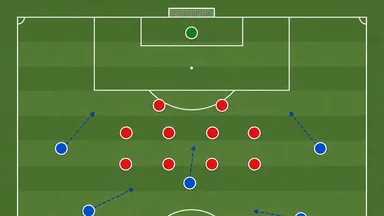
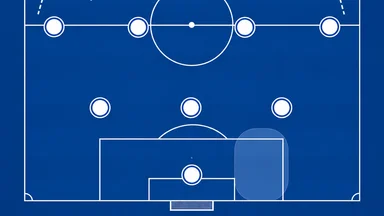
That match illustrated both the promise and the risk. When Zaïre-Emery roams forward, he leaves space behind him. Tchouaméni must cover, but if the opponent exploits the gap quickly, France can be exposed. Deschamps may opt to use Zaïre-Emery as a right-sided midfielder in a 4-3-3, where he can combine with the right-back to form a compact block. This would allow him to press high while still providing defensive cover.
Another option is to use him as a box-to-box player in a 4-2-3-1, with Tchouaméni and Camavinga as double pivots behind him. This shape gives him more license to attack but also demands more defensive work from the wingers. Griezmann’s tendency to drift inside could create overloads, but it also leaves the right flank exposed. Zaïre-Emery’s stamina will be tested.
Deschamps may also consider pairing him with a more defensive-minded midfielder like Youssouf Fofana in certain matches. This would sacrifice some attacking thrust for solidity. The coach’s decisions will depend on the opponent and the match state. What is clear is that Zaïre-Emery’s versatility gives Deschamps options he did not have in previous tournaments.
Potential Group Stage Matchups That Favor His Skill Set
France’s Group D draw—likely featuring Austria, the Netherlands, and a playoff winner—offers a range of challenges that play to Zaïre-Emery’s strengths. Austria’s high-pressing style under Ralf Rangnick demands close control and quick decision-making. Zaïre-Emery’s pass completion under pressure is excellent, and his ability to turn away from pressure with a first touch will be crucial.
Against the Netherlands, the key will be stopping their transition game. The Dutch midfield, without a pure defensive midfielder in the mold of earlier eras, can be exploited by a player who carries the ball through the lines. Zaïre-Emery’s recovery pace could also help counter the runs of wingers like Xavi Simons or Memphis Depay if they drop deep.
The playoff winner could be a team like Wales or Poland, both of which may sit deep and counter. In such games, Zaïre-Emery’s set-piece delivery—he has a good whipped cross from the right—could be a weapon. His late runs into the box also give France an additional aerial threat beyond the forwards.
There is a risk that opponents target him physically. Austria’s midfielders are aggressive in duels, and the Netherlands’ players are not shy about using their size. Zaïre-Emery’s slight frame could be a liability if he is isolated. However, his low center of gravity and balance help him ride challenges, and he has shown a willingness to engage in physical battles.
The Risk: Inexperience in High-Stakes Knockouts
For all his promise, Zaïre-Emery enters the World Cup with only around 10 senior caps. He has never played a knockout match in the Champions League for PSG, where the pressure is highest. The quarterfinals and beyond of a World Cup are a different beast: the margins are razor-thin, and one mistake can end the campaign.
Deschamps could opt to start a more experienced midfielder like Rabiot (if recalled) or Fofana in the early knockout rounds, using Zaïre-Emery as an impact substitute. His energy and pressing ability could be devastating against tiring defenses in the last 30 minutes. But if France face an early deficit, his attacking instincts might be needed from the start.
The 2022 World Cup final showed the value of young legs. France’s comeback against Argentina was fueled by substitutes like Randal Kolo Muani and Marcus Thuram. Zaïre-Emery could play a similar role, but starting him carries risk. If he is overwhelmed by the occasion, it could shake his confidence for years.
Veteran midfielders like Toni Kroos or Luka Modrić have exposed young players in past tournaments by shifting tempo and drawing fouls. Zaïre-Emery will need to show composure beyond his years. His performances in high-pressure league games for PSG—such as the Classique against Marseille—suggest he has the temperament, but the World Cup is another level.
Why He’s the Breakout Player to Watch
Zaïre-Emery combines two qualities that are rare in a single player: pressing intensity and technical security. He can operate as a defensive screen or as an advanced playmaker, giving Deschamps tactical flexibility that previous France midfields lacked. As the team transitions away from the Griezmann era—the playmaker is 35 and may not start every game—fresh energy in midfield becomes essential.
If France reach the semifinals, Zaïre-Emery will almost certainly be a household name. His trajectory mirrors that of Jude Bellingham at the 2020 European Championship or Pedri at Euro 2020: a teenager who arrives at a major tournament with hype and leaves as a star. The difference is that Zaïre-Emery’s role is more defensive, so his contributions may be less flashy but equally vital.
There is no guarantee he will start every game. Deschamps may rotate based on opponent, and injury could derail his tournament. But the signs are clear: France’s midfield future belongs to Warren Zaïre-Emery, and the 2026 World Cup is where he announces himself to the world.
Comparative Analysis: Zaïre-Emery vs. Other Young Midfielders in the Tournament
To fully appreciate Zaïre-Emery’s potential impact, it helps to compare him with other young midfielders expected to feature prominently at the 2026 World Cup. For instance, Spain’s Pedri, still only 23, offers superior vision and passing range but lacks the defensive bite of Zaïre-Emery. Pedri averages 1.2 tackles per 90 in La Liga, well below Zaïre-Emery’s 2.1. Conversely, England’s Jude Bellingham, now 23, provides similar two-way output but with a stronger goal-scoring record—he netted 10 goals in the 2023-24 season compared to Zaïre-Emery’s 4. However, Bellingham’s defensive contributions are less consistent; his tackle rate of 1.5 per 90 is lower, and he often operates in a more advanced role, leaving defensive duties to others.
Another comparison is with Germany’s Jamal Musiala, who excels at dribbling and creativity but rarely engages in defensive work. Musiala’s pressure success rate is around 30%, whereas Zaïre-Emery’s is 38%. This contrast highlights Zaïre-Emery’s unique value: he can be a defensive asset while still contributing to build-up play. For France, this means they can field a midfield that is both creative and resilient, without sacrificing defensive solidity.
On the other hand, some young midfielders like Netherlands’ Ryan Gravenberch offer similar physical attributes but lack Zaïre-Emery’s defensive discipline. Gravenberch’s interceptions per 90 are 1.2, compared to Zaïre-Emery’s 1.8. This suggests that Zaïre-Emery reads the game better in defensive phases. Such comparisons underscore why Deschamps is betting on him: in a tournament where midfield battles are often decisive, having a player who can win the ball and start attacks is a significant advantage.
Potential Tactical Adjustments for Different Opponents
Deschamps’ tactical flexibility will be tested against various opponents. Against a possession-heavy team like Spain, France may need Zaïre-Emery to sit deeper and help Tchouaméni shield the defense. In such a scenario, his interceptions and short passing could be crucial to disrupt Spain’s rhythm. Conversely, against a low-block team like Poland, he could be given more freedom to join the attack, using his late runs to create overloads in the box.
Another consideration is the role of full-backs. If France’s right-back, such as Jules Koundé or Malo Gusto, pushes high, Zaïre-Emery could tuck inside to form a temporary back three, providing cover. This would allow the team to maintain width without leaving gaps. Against a team like the Netherlands, which often uses wingers who cut inside, this adjustment could be vital.
Set pieces are another area where Zaïre-Emery’s delivery could be exploited. He has shown the ability to whip in crosses from the right flank, and his corner-taking could create chances for defenders like Dayot Upamecano or William Saliba. In tight knockout matches, set-piece efficiency often makes the difference, and Zaïre-Emery’s skill set adds a new dimension to France’s attacking arsenal.
The Role of Experience: How Zaïre-Emery Can Learn from Veterans
Despite his youth, Zaïre-Emery has the opportunity to learn from seasoned teammates like Antoine Griezmann and Olivier Giroud (if selected). Griezmann’s off-ball movement and defensive work rate are exemplary, and Zaïre-Emery can study how he positions himself to support both attack and defense. Giroud’s hold-up play and link-up skills can also teach Zaïre-Emery how to play off a striker, making his late runs more effective.
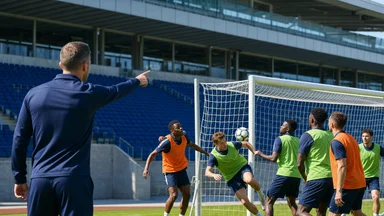
Moreover, the presence of Tchouaméni and Camavinga, who have Champions League experience, provides a support system. They can help Zaïre-Emery manage game tempo and avoid unnecessary risks. In training, Deschamps can simulate high-pressure scenarios to prepare him for the intensity of knockout matches.
However, there is a counter-argument: over-reliance on veterans might stifle Zaïre-Emery’s natural instincts. If he is constantly told to play it safe, he may lose the creativity that makes him special. Deschamps must strike a balance between structure and freedom, allowing Zaïre-Emery to express himself while maintaining tactical discipline.
Conclusion: A New Era for France’s Midfield
Warren Zaïre-Emery embodies the future of French football. His two-way output, tactical intelligence, and versatility make him the ideal player to anchor the midfield transition from the Kanté-Rabiot era. While risks remain—inexperience, physical challenges, and tactical adjustments—the potential rewards are immense. If he can replicate his club form on the international stage, France will have a midfield engine capable of driving them to glory. The 2026 World Cup is his stage, and the world will be watching.