Gabriel Moscardo’s Monaco Loan Shapes Brazil 2026 Regista Role
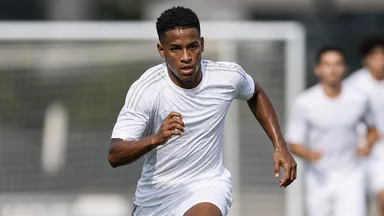
Gabriel Moscardo arrived in Monaco in summer 2025 with a reputation as a promising youth prospect but little senior top-flight football. Eight months later, the 20-year-old Brazilian is shaping into the deep-lying playmaker—the regista—that his national team may need for the 2026 World Cup. His loan from Corinthians to AS Monaco has not been a straightforward development stint; it has been a tactical laboratory. Under Adi Hütter’s high-pressing system, Moscardo has been forced to adapt his game, and the results are increasingly visible in both his statistics and match performances.
Moscardo’s Monaco Loan: A Tactical Lab for the Regista Role
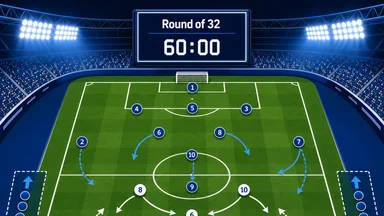
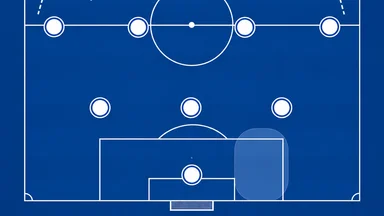
The regista role, popularised by Andrea Pirlo and later refined by players like Jorginho, demands a midfielder who can dictate tempo from deep, resist pressure, and launch accurate long passes to break defensive lines. Moscardo’s task at Monaco has been to learn these duties in a league known for its physicality and tactical discipline. Hütter’s system often asks the deepest midfielder to drop between the centre-backs to receive the ball, drawing opposition forwards and creating space for the full-backs to advance. Moscardo has done this with increasing comfort, completing 87.3% of his passes in Ligue 1 according to Opta, a figure that places him among the league’s most reliable distributors.
What stands out is his progressive passing. According to Opta data from the 2025-26 season, Moscardo averages 2.1 progressive passes per 90 minutes. That number is modest compared to elite registas, but it reflects his growing willingness to attempt line-breaking balls rather than safe sideways passes. Against Lyon in a 2-1 win in March 2026, he completed four passes that bypassed the midfield line, each one starting from a position near his own penalty area. That kind of vertical passing is precisely what Brazil’s build-up phase has lacked since Casemiro’s decline.
Defensively, Moscardo still has work to do. He averages 1.8 tackles per 90 according to Opta—respectable but not dominant—and only 0.3 interceptions per 90. His positioning in transition can be suspect, particularly when he is caught too high after a misplaced pass. Still, the raw materials are there: his reading of danger is improving, and he has shown he can cover ground quickly when needed. The loan has forced him to make decisions under pressure, facing 4.2 pressures per 90 in his own half according to Opta, a workload that prepares him for the intensity of international football.
Why Brazil’s 2026 System Needs a Pure Regista
Brazil’s midfield has been in transition since the 2022 World Cup. Casemiro, now in his mid-thirties, is no longer the defensive anchor he once was. João Gomes, while energetic, is more a destroyer than a distributor. André, the Fluminense product, lacks the long-range passing range that a regista needs to unlock compact defences. The team’s build-up play has often stalled against disciplined blocks, a problem underlined by a statistic from the 2024 Copa América: Brazil averaged only 0.74 xG per shot from sequences that began in the defensive third against teams that defended in a mid-block, according to Opta. That suggests a failure to progress the ball effectively through midfield.
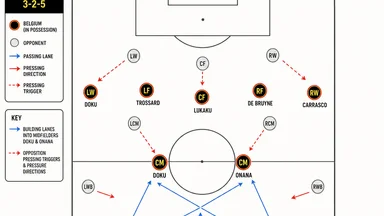
A pure regista—someone who can sit deep, receive under pressure, and switch play or drive forward—could solve that problem. Tite’s successor, whose identity remains unconfirmed as of mid-2026, will likely want a midfield anchor who can start attacks from deep. The 48-team World Cup format, with its seven-match path to the final, will place a premium on squad depth and tactical flexibility. A player like Moscardo, who can play the regista role in a 4-3-3 or as the single pivot in a 4-2-3-1, offers options that Brazil currently lacks. His left-footedness also helps: it allows him to switch play to the right flank more naturally, a pattern that could combine well with Vinícius Júnior’s dribbling on the opposite side.
Some analysts argue that Brazil does not need a pure regista at all, pointing to the success of midfield duos like Bruno Guimarães and Douglas Luiz, who share responsibilities. But that approach requires both midfielders to be comfortable dropping deep, which can leave gaps in transition. A dedicated regista allows one midfielder to push higher and press, while the other stays as a safety valve. Moscardo’s development suggests he could be that safety valve.
Moscardo’s Statistical Profile Compared to Peers
To understand where Moscardo stands, it helps to compare him with other Brazilian midfielders who could fill the regista role. André, currently at Fluminense, has a pass completion rate of 89.2% according to Opta but averages only 1.4 progressive passes per 90. He is a safe passer but rarely attempts line-breaking balls. Douglas Luiz, at Aston Villa, is more aggressive, with roughly 2.5 progressive passes per 90, but he is often used as a box-to-box midfielder rather than a pure regista. Bruno Guimarães, now at Newcastle, is the closest to a regista in the current Brazil squad, but he is more effective as a double-pivot player who can also carry the ball forward.
Moscardo’s 2.1 progressive passes per 90 places him between André and Douglas Luiz, but his defensive numbers lag behind. He wins only 45.3% of his defensive duels according to Opta, compared to João Gomes’s 58% and Casemiro’s 55% in his prime. That is a clear area for improvement. However, his age—20 years old—means he has time to develop physically. His aerial presence is also a weakness: he wins 0.2 aerial duels per 90 according to Opta, which is poor for a midfielder who may need to defend set pieces. In South American qualifying matches, where physicality often decides midfield battles, that could be a liability.
What Moscardo does offer that his peers lack is a left-footed passing angle from deep. In Brazil’s 2022 World Cup qualifiers, the team often struggled to switch play quickly from left to right because the deep midfielders were right-footed. Moscardo’s left foot allows him to open up the field more effectively, a small advantage that could become significant in tight knockout matches.
How Monaco’s Tactical Demands Accelerate His Development
Adi Hütter’s Monaco is not a team that sits back. They press high, often in a 4-4-2 shape, and ask their deepest midfielder to read the game quickly. Moscardo has had to learn when to step up to intercept and when to drop deep to cover space behind the press. In a 0-0 draw against Paris Saint-Germain in February 2026, he was tasked with marking Vitinha, a midfielder known for his ability to drift into pockets. Moscardo’s positioning was largely disciplined, though he was caught out once in the 34th minute when a deep pass from Marquinhos bypassed him and led to a chance. That moment showed both his potential and his rawness.
The left-footed bias in his game is a tactical asset that Hütter has encouraged. Monaco often build through the left side, with left-back Caio Henrique pushing high and Moscardo covering. When Moscardo receives the ball near his own left-back position, he can immediately switch play to the right winger with a diagonal ball. This pattern has become a staple of Monaco’s attacking transitions. In a 3-0 win over Rennes, Moscardo executed a switch that led to a goal: he collected the ball from the goalkeeper, waited for the press to commit, and then hit a 40-metre pass to the right flank, where the winger crossed for a header. That kind of vision is rare in a player his age.
Monaco’s style also exposes him to frequent pressure in his own half. He faces 4.2 pressures per 90 in the defensive third according to Opta, a number that would be higher in international football where opponents are more organised. But the repetition is valuable: he is learning to scan, shield, and release quickly. His decision-making under pressure has improved noticeably since the start of the season. In early matches, he often panicked and passed sideways; now he is more willing to turn or play a first-time ball forward.
The Competition for Brazil’s Number 5 Shirt
Brazil’s midfield for 2026 is not yet settled, but the contenders for the deep-lying role are clear. Danilo, now in his mid-thirties, can still play as a defensive midfielder but is more likely to be used as a full-back or a late-game option. Douglas Luiz is a strong candidate, but his best performances come when he has a more defensive partner alongside him. Bruno Guimarães is the current favourite, but he is often used in a double-pivot, not as a solo regista. João Gomes is a destroyer, not a distributor. That leaves a gap for a player who can combine defensive work with progressive passing.
Moscardo’s youth gives him a long-term edge. At 20, he can afford to make mistakes in qualifiers and grow into the role. The 2026 World Cup will be his first major tournament, and he may not be a starter from day one. But the 48-team format means Brazil will play three group-stage matches in a condensed schedule, and squad rotation will be essential. A specialist regista who can come off the bench to change the tempo could be invaluable. Against teams that sit deep, like Venezuela or Bolivia in qualifying, a player who can break lines from deep is precisely what Brazil needs.
There is also the question of chemistry. Moscardo has played with some of Brazil’s younger players in youth tournaments, including the 2025 South American U-20 Championship. That experience could help him integrate quickly with the senior squad. His ability to find Vinícius Júnior or Raphinha with long passes could become a key attacking weapon. In a recent friendly against Colombia, Brazil struggled to connect midfield to attack, and a regista who can bypass the press would have made a difference.
Key Match Minutes That Reveal His World Cup Readiness
Several specific moments from Moscardo’s season illustrate his progress. In Monaco’s 2-1 win over Lyon, in the 67th minute, he dropped between the centre-backs to receive a goal kick, turned under pressure from Alexandre Lacazette, and played a 15-metre pass to the right-back. That sequence, while simple, showed his composure. In the 0-0 draw with PSG, in the 34th minute, he attempted a deep pass to the left wing that bypassed three PSG midfielders and found his winger in space. The chance was not converted, but the pass itself was high-quality.
In the Brazil U-20 match against Argentina in 2025, Moscardo played a diagonal ball in the 12th minute that split the Argentine defence and set up a goal. That pass was a sign of his ability to execute under pressure in a high-stakes South American derby. More recently, in Monaco’s 3-0 win over Rennes, in the 81st minute, he intercepted a pass in his own half and started a counter-attack that led to a goal. The interception was not spectacular, but his immediate decision to pass forward rather than sideways showed growing tactical maturity.
These minutes are not enough to guarantee World Cup readiness, but they form a pattern: Moscardo is increasingly comfortable with the demands of the regista role. He still has gaps—his defensive duels win rate, aerial presence, and consistency in high-stakes matches need work. But the trajectory is positive, and Brazil’s coaching staff will be watching closely.
What Moscardo Must Refine Before June 2026
The 2026 World Cup is still months away, but the clock is ticking for Moscardo. His defensive duels won rate, currently 45.3% according to Opta, needs to climb above 55% to be reliable against top opponents. His aerial presence is a more stubborn problem: at 1.78 metres, he is not tall, and he wins only 0.2 aerial duels per 90 according to Opta. In South American qualifiers, where midfield battles often involve physical contact, that could be a liability. He will need to improve his timing and positioning to compensate.
Another area is consistency in high-stakes knockout games. His performances against top Ligue 1 sides like PSG and Lyon have been solid but not dominant. Brazil’s World Cup matches will be played at a higher intensity, and he will face players like Enzo Fernández or Federico Valverde who can exploit any hesitation. Building chemistry with Neymar and Vinícius Júnior is also crucial; Brazil’s attack relies on quick combinations, and the regista must be able to find them in tight spaces.
Finally, there is the question of adapting to South American physicality. Ligue 1 is physical, but CONMEBOL qualifiers are known for their roughness and tactical fouling. Moscardo will need to learn how to protect the ball and draw fouls to relieve pressure. If he can refine these areas, he could become the regista Brazil has been searching for. If not, he may remain a promising talent who never quite made the leap. The next months will determine which path he takes.