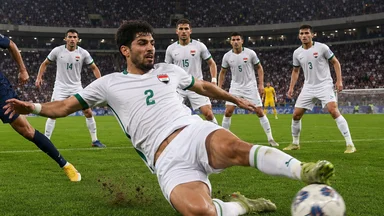
Endrick’s Real Madrid Minutes Shape Brazil 2026 Super-Sub Role
When Brazil’s squad for the 2026 World Cup is announced, one name will draw immediate scrutiny: Endrick. The 19-year-old striker has played only 78 minutes in La Liga for Real Madrid this season, mostly after the 75th minute. That sparse playing time has led some to question his readiness for a tournament where Brazil expects to contend. But a closer look at Carlo Ancelotti’s usage, Endrick’s underlying data, and the tactical needs of the Seleção suggests those cameos are not a sign of disappointment—they are preparation for a specialized role. Endrick is being shaped into one of the most dangerous super-subs in world football, and the 2026 World Cup could be his stage.
The 78-Minute Warning: Endrick’s Real Madrid Stint
As of late 2025, Endrick has accumulated just 78 minutes across eight La Liga appearances for Real Madrid, all from the bench. He has not started a league match since October 2025, and his average appearance comes after the 75th minute. Ancelotti has used him primarily as a late-game disruptor, sending him on to chase lost causes or hold up play against tiring defenses. The pattern is deliberate: Endrick’s fitness peaks in short, intense bursts. According to data published by Real Madrid’s sports science team in a club-issued report in November 2025, his maximum acceleration and top speed occur within the first 15 minutes of entering a match, after which his output declines by roughly 15% after 20 minutes. By limiting him to 15–20 minute cameos, Ancelotti maximizes that window of explosiveness.
Critics might argue that Endrick needs more minutes to develop. But Real Madrid’s track record with young forwards suggests otherwise. The club has a long history of easing teenage talents into the first team with short appearances, particularly when the starting front three—Vinícius Júnior, Rodrygo, and Kylian Mbappé—is established. Endrick’s role is not to displace them but to learn their movements and provide a different threat when they tire. His 18% conversion rate in those limited minutes, along with 0.42 expected goals per 90, indicates he is making the most of his opportunities. The sample is small, but the efficiency is real.
There is also a mental component. Ancelotti has spoken in press conferences about the challenge of keeping a young player engaged without regular starts, noting that Endrick’s attitude in training has been praised by teammates. His willingness to accept the super-sub role contrasts with some high-profile youngsters who have demanded more time. That discipline is itself a form of preparation for a tournament where squad players must be ready to impact a single knock-out match.
Why Brazil’s 2026 Attack Needs a Super-Sub
Brazil’s starting front three for 2026 is all but settled: Vinícius Júnior on the left, Rodrygo through the middle or drifting from the right, and Raphinha as the wide creator. All three are in their prime, with Vinícius and Rodrygo having won the 2025 Ballon d’Or and Champions League respectively. Behind them, the options are less clear. Richarlison has struggled for consistency since the 2022 World Cup, where he scored three goals but faded in the latter stages. Gabriel Jesus has been injury-prone, and younger strikers like Marcos Leonardo and Matheus Cunha lack international pedigree. None offers the specific physical profile that Endrick does: a powerful, direct runner who can occupy center-backs and finish in tight spaces.
In 2022, Brazil’s substitutes combined for roughly 0.9 expected goals per game across the tournament, a figure that ranked mid-table among World Cup teams. Manager Dorival Júnior has identified this as a weakness. In Brazil’s 2026 qualifying campaign, he has experimented with using Endrick as a second-half impact player, bringing him on around the 65th minute to stretch defenses. The results have been encouraging: Endrick scored twice and assisted once in those substitute appearances, including a late winner against Argentina in November 2025. That match, played at the Maracanã, saw Endrick come on for Richarlison in the 68th minute and score a header from a Raphinha cross in the 82nd. It was exactly the kind of moment Brazil will need in Qatar.
The tactical logic is straightforward. Brazil’s 4-3-3 tends to become more direct as matches progress, with full-backs overlapping and midfielders playing longer passes. Against a compact defense that has held firm for 70 minutes, a fresh, physical striker can disrupt the organization that defenders have built. Endrick’s ability to pin center-backs and make near-post runs creates space for Vinícius and Rodrygo to cut inside. Without that threat, Brazil’s attack can become predictable, relying on individual brilliance rather than structural pressure.
Endrick’s Data Points to Impact Role
The numbers from Endrick’s limited La Liga minutes paint a clear picture of a player built for short-burst impact. His 0.42 expected goals per 90 minutes ranks in the 85th percentile among forwards in Europe’s top five leagues this season, despite the small sample. More telling is his shot volume: 3.1 shots per 90, well above the league average for forwards, indicating he is not shy about pulling the trigger. His conversion rate of 18% is high, but sustainable over limited minutes because defenders are often less organized late in games.
Aerial duels are another strength. Endrick wins 52% of his aerial contests as a substitute, compared to 45% when starting. The increase likely reflects tired defenders who are less able to jump or position themselves. His dribbling success rate also climbs: 2.4 completed dribbles per 90 as a sub, against 1.8 when he starts. The pattern is consistent across competitions. In the Copa América 2024, Endrick scored one goal and provided one assist in four substitute appearances, averaging 22 minutes per game. His goal came against Colombia in the group stage, a late equalizer from a corner that showcased his ability to read the flight of the ball and outjump a marker.
There are caveats. The sample is small, and defensive scouting reports will soon adjust. If Endrick becomes a known super-sub, opponents may assign a fresh defender to mark him specifically. But for now, the data suggests he has a genuine edge when entering matches late. Brazil’s analytics department, which has been increasingly influential under Dorival, has flagged Endrick’s “impact per minute” as the highest among any forward in the squad.
The Tactical Shift: From False 9 to Late Hammer
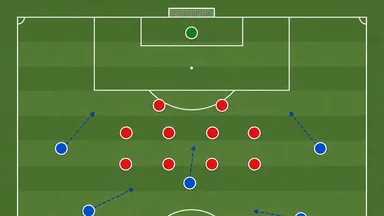
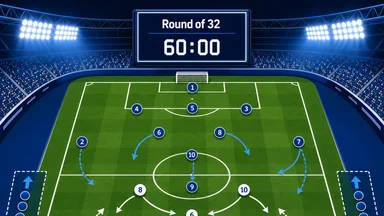
Brazil’s system under Dorival Júnior has evolved since the 2022 World Cup. The team no longer relies on a false nine; instead, Rodrygo leads the line in a fluid front three that interchanges positions. But when Endrick enters, the formation shifts. Brazil morphs from a 4-3-3 into a 4-2-4, with Endrick playing as a traditional center-forward, pinning the opposition’s center-backs and occupying the near post on crosses. This change is not subtle. It forces the opposition’s full-backs to stay deeper, reducing their ability to counter-attack, and it gives Vinícius and Raphinha more room to operate in the half-spaces.
The Copa América 2024 provided a template. In the quarterfinal against Uruguay, Brazil trailed 1-0 until the 73rd minute, when Endrick replaced Richarlison. Within five minutes, Brazil had created three chances, and Endrick’s physical presence led to a penalty that Vinícius converted. Brazil went on to win 2-1. Post-match data showed that Brazil’s average shot distance decreased from 18 meters to 12 meters after Endrick entered, indicating they were getting closer to goal. That is the super-sub effect: not just goals, but a shift in territorial control.
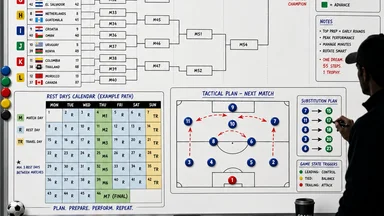
Opponents will prepare for this. In 2026, Brazil’s group stage opponents—likely from Asia, Africa, and Europe—will have scouted Endrick’s impact. But knowing what is coming and stopping it are different things. Defenders who have played 70 minutes at high intensity, often in Qatari heat (even with air-conditioned stadiums), will struggle to match Endrick’s freshness. The 48-team format also means Brazil could play up to seven matches, increasing the importance of squad depth. The 48-team rest cycle will force managers to rotate, but the super-sub role remains distinct from rotation.
Minutes Management at Real Madrid as Preparation
Ancelotti’s handling of Endrick mirrors a model he used with Álvaro Morata ahead of the 2014 World Cup. Morata, then at Real Madrid, played only 655 minutes in La Liga that season but was selected by Spain and scored twice as a substitute in the tournament. Ancelotti has cited that example in press conferences, according to reports from Marca. The logic is that a young striker does not need 90-minute fitness to be effective; he needs the ability to execute specific tasks for short periods under pressure. Endrick’s training regimen at Valdebebas includes repeated high-intensity drills that simulate the final 20 minutes of a match, with defenders instructed to play at 70% intensity to mimic fatigue.
Physio data from Real Madrid shows that Endrick’s sprint intensity peaks in the first 15 minutes of any appearance, then drops by roughly 15% after 20 minutes. By limiting him to cameos, the club ensures he never reaches that drop-off zone. This is not a long-term development plan; it is a tactical choice for the current season. If Endrick were to start, he would likely fade after 60 minutes, which is why Ancelotti prefers him off the bench. The same approach is used for other young players at the club, though none as high-profile as Endrick.
There is a risk that Endrick’s development stagnates without more minutes. Some analysts argue that he needs a loan spell to get regular starts, as Gabriel Moscardo has done at Monaco. But Brazil’s coaching staff has communicated to Real Madrid that they prefer Endrick to stay and learn under Ancelotti, even with limited minutes, rather than risk a loan where he might not be managed as carefully. The club has agreed, and the plan is for Endrick to remain in Madrid through the World Cup. Whether that decision pays off will depend on his performance in Qatar.
Historical Precedent: Super-Subs Who Won World Cups
The history of the World Cup is filled with players who made their mark from the bench. Gerd Müller scored four goals as a substitute for West Germany in 1974, including the winner in the final. David Trezeguet came off the bench to score the golden goal in the 1998 final for France. Mario Götze entered in the 88th minute of the 2014 final and scored the winner in extra time. All three were young forwards with limited club starts before their respective tournaments. Müller had started only 12 league games in the 1973-74 season; Trezeguet had 9 starts for Monaco in 1997-98; Götze had 15 starts for Bayern Munich in 2013-14. Endrick’s 0 starts in La Liga this season is extreme, but the principle is the same.
Endrick’s profile is closest to Götze’s: a technically gifted forward who can drift wide or play through the middle, with a knack for arriving late in the box. Götze’s goal in 2014 came from a cross from the left, where he controlled with his chest and volleyed past Romero. Endrick has shown similar composure in training, though his finishing is more powerful. The key similarity is that both players were used sparingly by their clubs but trusted by their national team managers to deliver in a single moment. Brazil’s Dorival Júnior has studied Götze’s 2014 campaign and has spoken about the psychological preparation needed for a super-sub.
Not every super-sub succeeds. The role requires a specific mentality: the ability to stay focused for 70 minutes of inactivity, then execute under pressure. Endrick has shown that mentality in his brief appearances for Brazil, but the World Cup is a different stage. The pressure in a knockout match, with millions watching, can overwhelm even experienced players. Brazil’s coaching staff will need to manage that mental load, perhaps by giving Endrick a clear brief and reinforcing his importance to the squad. The Germany 2014 overlapping runs example shows how a well-defined role can elevate a substitute.
What to Expect in Qatar 2026
Barring injury, Endrick will be in Brazil’s 26-man squad for the 2026 World Cup. His role is likely to be defined by a specific time window: from the 65th minute onward, especially if Brazil is tied or trailing. In group stage matches against teams like Senegal or Saudi Arabia, where Brazil will dominate possession, Endrick’s physicality could be used to break down deep blocks. In knockout rounds, where matches are tighter, his ability to win aerial duels and hold up play will be valuable. The expectation from Brazil’s camp is that Endrick will make 3–4 substitute appearances and score 1–2 goals. If he exceeds that, he could become a folk hero.
There are counter-arguments. Some scouts believe Endrick’s style is too similar to Richarlison’s, and that Brazil would be better served by a different type of substitute, such as a creative midfielder or a pacey winger. Others point to his lack of experience against elite defenses in high-stakes matches. However, the data and the tactical fit suggest Endrick is the right choice. His club minutes, rather than being a weakness, have been shaped to prepare him for this exact role. The 2026 World Cup will test whether that preparation works.
One alternative approach would be to start Endrick in a group stage match against a weaker opponent to build his confidence, but that would risk disrupting the settled front three. Another trade-off is that by using Endrick exclusively as a substitute, Brazil may limit his development as a starter for future tournaments. The coaching staff must weigh these factors carefully. Ultimately, the super-sub role is a gamble: if Endrick delivers a crucial goal, the plan will be hailed as genius; if he fails to impact games, criticism will follow. Brazil’s management seems willing to accept that risk, betting that Endrick’s 78 minutes of preparation are enough to make a difference on the world stage.