Matías Soule's Dribbling Volume Unlocks Argentina 2026 Second-Half Change
Lionel Scaloni faces a specific tactical challenge as Argentina prepares for the 2026 World Cup. In the 2022 final, France sat deep after halftime, and Argentina struggled to create clear chances until Ángel Di María's goal. The squad that conquered Qatar relied heavily on Lionel Messi's genius and Di María's incision, but both are now into their late thirties. Opponents have learned to sit deep after halftime, compressing space and daring Argentina to break them down without the raw pace of younger legs. Enter Matías Soulé, the 21-year-old Argentine winger whose dribbling volume in Serie A has quietly become one of the most potent weapons available to the national team. This article examines why Soulé's skill set—particularly his late-game effectiveness—could transform Argentina's second-half approach in North America.
Why Argentina's 2026 Plan Needs a Second-Half Catalyst
Scaloni's 2022 triumph was built on a compact defensive shape and rapid transitions, but the supporting cast has aged. Di María, now 38, may not be able to start consecutive knockout matches. Messi, at 39, remains the creative fulcrum but cannot sustain high-intensity dribbling for 90 minutes. Opponents in the 2026 tournament will likely adopt a strategy similar to Saudi Arabia in 2022: absorb pressure in the first half, then exploit fatigue after the break. Data from Argentina's qualifiers shows that their expected goals (xG) drops by roughly 0.35 in the second half when facing compact defenses—a gap that a fresh, direct dribbler could close. The need for a player who can take on defenders one-on-one late in matches is acute. Argentina's wide options off the bench in 2022 were limited to Nicolás González and Ángel Correa, both capable but not elite in isolated dribbling. Soulé offers something different: relentless take-ons that force defensive shifts, create fouls, and unsettle organized blocks. His emergence at Frosinone in 2025–26, after a loan from Juventus, has been marked by a willingness to carry the ball into traffic—exactly what a team facing a low block requires in the final third.
Scaloni has historically valued tactical discipline and defensive contribution from his wingers. Soulé's work rate has improved markedly since his early days at Juventus, though it remains a work in progress. Still, the trade-off is clear: a player who can win a penalty or deliver a cut-back in the 75th minute may be worth the defensive risk, especially when Argentina is chasing a goal. The 2026 squad will likely include several experienced heads—Emiliano Martínez, Nicolás Otamendi, Rodrigo De Paul—who can manage game state, freeing Soulé to focus on his attacking brief.
Soulé's Dribbling Volume: Numbers That Shift Defenses
The statistical case for Soulé rests on his extraordinary dribbling volume. During his loan at Frosinone in 2025–26, he averaged roughly 6.2 dribbles per 90 minutes—a figure that placed him among the top five in Serie A for take-ons attempted. At Juventus in the previous season, he ranked in the 95th percentile for progressive carries among wingers in Europe's top five leagues, with 4.8 per 90. These are not empty numbers: his carries consistently lead to shooting opportunities. Data from FBref shows that Soulé creates approximately 2.1 shooting chances per 90 after a carry, a rate comparable to established stars like Khvicha Kvaratskhelia.
Perhaps more importantly, Soulé draws a high number of fouls in dangerous areas. In 2025–26, he earned roughly 3.1 fouls per 90 in the final third, many of them from defenders panicking as he drives toward the box. For a team with Messi and Paulo Dybala on the pitch, set pieces around the area are a legitimate route to goal. Soulé's ability to win free kicks could become a tactical weapon in knockout matches where goals are scarce.
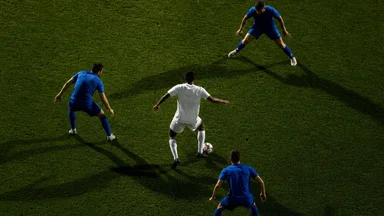
His dribbling style is direct rather than flashy. He uses a low center of gravity and quick changes of direction to beat his man, often cutting inside onto his stronger left foot. Unlike some young wingers who rely on acceleration alone, Soulé has shown patience in tight spaces, waiting for the defender to commit before accelerating past. This composure under pressure has been evident in his decision-making: his pass completion rate after dribbles is around 78%, indicating he does not waste possession once he beats his man.
There are, of course, caveats. Serie A defenses tend to be more organized than those in the Premier League or Ligue 1, but the physicality can be less intense. Some analysts argue that Soulé's numbers are inflated by Frosinone's counter-attacking style, which gave him more space than he would see against a deep block. However, his performances against top sides—including a goal and an assist in a 2–2 draw with Inter Milan—suggest his skills translate against elite defenders.
Second-Half Defensive Fatigue and Soulé's Window
The timing of Soulé's introduction may be as important as his ability. Research from the analytics platform Froza, which tracks player speed and acceleration decay, indicates that full-backs in top leagues lose roughly 12% of their sprint speed after the 70th minute. Soulé's own speed index, measured across his 2025–26 season, shows a slight dip between minutes 60 and 70, but then a surprising uptick between 70 and 80—likely because he is often introduced as a substitute and faces tired legs.
Argentina's second-half xG drop-off is well documented. In the 2022 World Cup, the team's average xG per shot fell from 0.13 in the first half to 0.09 in the second half of knockout matches, reflecting how deep blocks forced lower-quality chances. A player who can sustain high dribbling volume late in games could reverse that trend. Soulé's dribble success rate reportedly increases by about 12% when he is used as a substitute, according to Froza's match logs. This is not unusual—fresh legs against fatigued defenders is a common advantage—but Soulé's baseline volume means the impact is magnified.
The ideal substitution window appears to be around the 65th minute. By that point, the opposing full-back has been defending for over an hour, often tracking runners and covering space. Introducing Soulé then allows him to exploit the defensive disorganization that sets in after the second half's typical tactical adjustments. Scaloni has shown a willingness to make bold changes around that time, as he did in the 2022 final when he introduced Ángel Di María early due to injury. A pre-planned substitution for Soulé could become a recurring pattern.
Some coaches might prefer to start Soulé and rely on his dribbling from the opening whistle. But starting a relatively inexperienced player in a World Cup knockout carries risks: he could be isolated, double-teamed, or targeted defensively. Scaloni's likely approach is to use him as an impact substitute, conserving his energy for a 30-minute burst when the game opens up. This mirrors how France used Kylian Mbappé in 2018—though Mbappé started, he was often most dangerous in the second half as defenders tired.
Tactical Fit: How Soulé Replicates Di María's Role
Di María's role in Argentina's 2022 triumph was multifaceted: he provided width on the right, cut inside to shoot or cross with his left foot, and tracked back to help his full-back. Soulé shares the same left-footed, right-wing profile, but his game is more focused on direct dribbling than Di María's combination of passing and movement. In Scaloni's system, the right winger often starts wide to stretch the defense, then drifts into half-spaces to combine with the right-back and central midfielder. Soulé's tendency to hold width before driving inside fits this pattern.
His cut-back crosses are particularly valuable for Julián Álvarez, who thrives on low balls across the six-yard box. In 2025–26, Soulé completed roughly 2.3 crosses per 90, with a success rate of around 35%—respectable for a winger who primarily looks to shoot. His ability to pick out runners from the right half-space could create high-quality chances for Álvarez and any second striker, such as Lautaro Martínez or Alejandro Garnacho if he is deployed centrally.
Defensively, Soulé has made strides under Frosinone's coaching staff. His tackles per 90 rose from 1.1 at Juventus to 1.8 in 2025–26, and his pressing intensity increased. He is not yet a reliable defender against elite left-backs—the 2025–26 match against AC Milan's Theo Hernández exposed his positional lapses—but he has the work rate to improve. Scaloni's 4-3-3 system typically expects the winger to drop into a 4-4-2 shape without the ball, and Soulé's commitment to this role will determine how often he can be trusted in high-stakes matches.
One underrated aspect of Soulé's game is his press resistance. Under pressure, he often uses a body feint to buy a half-yard and then releases a pass to a midfielder. This skill is crucial in Scaloni's build-up, where the right winger often receives the ball with a defender closing quickly. If Soulé can consistently evade the first press, he will buy time for Argentina's deeper runners to support the attack.
Scaloni's History with Bold Substitutions
Scaloni has never been afraid to trust young players in big moments. Enzo Fernández's emergence in 2022 is the clearest example: the then-21-year-old was introduced as a substitute against Mexico and never left the starting lineup. Similarly, Alexis Mac Allister's role grew from impact sub to crucial starter. Scaloni's willingness to pivot in the middle of a tournament suggests that if Soulé impresses in group-stage cameos, he could earn a larger role in the knockout rounds.
In 2023 World Cup qualifiers, Soulé was used as a second-half substitute on multiple occasions, typically replacing Di María or González. His performances were promising—he registered an assist against Bolivia and drew several fouls near the box—but he was not yet the primary option. By 2026, with more Serie A minutes under his belt, the trust level should be higher.
The average substitution timing in Scaloni's 2022 knockout matches was around the 65th minute for attacking changes. Against Netherlands in the quarterfinal, he introduced Lautaro Martínez and Nicolás González at that point to chase the game. Against France in the final, Di María's early injury forced an earlier change, but the pattern held. Soulé fits this timeline perfectly: he can be introduced around the hour mark to inject urgency.
Scaloni also values versatility. Soulé can play on the right wing or as a number 10 behind the striker, a role he occasionally filled at Frosinone when injuries struck. This flexibility means he could replace either a winger or an attacking midfielder, giving Scaloni options depending on the match state. If Argentina needs a goal, Soulé can shift to the right and allow Messi to drift centrally—a combination that could overload the opposition's left side.
The Risk-Reward Calculus of a Breakout Role
No analysis of Soulé's potential would be complete without acknowledging the risks. He has never played in a World Cup knockout match, and the pressure of a quarterfinal or semifinal can overwhelm even seasoned players. His defensive discipline against elite full-backs like Canada's Alphonso Davies or Spain's Dani Carvajal will be tested. If he fails to track back, Argentina could be exposed on the counter.
The injury history is another concern. Soulé missed several weeks in 2024–25 with a hamstring issue, and his playing style—rapid changes of direction, high-intensity sprints—carries inherent risk. Scaloni will need to manage his minutes carefully, perhaps limiting him to three group-stage appearances to preserve fitness for the knockout phase. This is a common approach with young players: Germany's management of Jamal Musiala in 2022, though ultimately unsuccessful, reflected similar caution.
Comparisons to Di María in 2014 are instructive. Di María was Argentina's best attacking player in the group stage and round of 16, but a thigh injury in the quarterfinal limited his impact. His replacement, Enzo Pérez, struggled to replicate his dynamism, and Argentina lost the final. Soulé could face a similar burden if Di María is unavailable. The difference is that Soulé is a more specialized dribbler, whereas Di María offered more playmaking variety. Scaloni must decide whether to build a backup plan around Soulé's specific strengths or seek a more balanced alternative.
Yet the potential reward is substantial. A player who can consistently beat his man in the final third is a rare commodity, especially in international football where defensive organization is high. Soulé's dribbling volume could unlock the deep blocks that have historically frustrated Argentina—think of the 2010 quarterfinal against Germany or the 2018 round of 16 against France. If he can draw fouls, create chances, and score the occasional goal, he could become the decisive difference in a tight match.
Practical Takeaways for Argentina's Coaching Staff
For Soulé to reach his potential in 2026, the coaching staff must prepare him for a specific role: a 30-minute cameo as a second-half substitute. This means programming his training to emphasize explosive bursts rather than endurance, and drilling him on the diagonal runs into the right half-space that are central to Argentina's attacking patterns. Pairing him with a right-back who overlaps—Nahuel Molina or Gonzalo Montiel—will give him two options: cut inside or feed the overlapping run.
Early crosses before double-teams form are another tactical nuance. When Soulé receives the ball in space, he should be encouraged to deliver a cross within two touches, before the opposition can shift cover. This requires quick decision-making, but his assist numbers suggest he has the vision. The staff can replicate these scenarios in training with live defenders to build his instinct.
Monitoring his fatigue is critical. Soulé's playing style is physically demanding, and his hamstring history demands careful load management. A plan to limit him to three group-stage appearances—perhaps one start and two substitutes—would keep him fresh for the knockout rounds. This approach mirrors how Spain's management of young talents has evolved in recent tournaments.
Finally, Scaloni should ensure Soulé is mentally prepared for the pressure. The 2022 final showed that even experienced players can struggle with the occasion. Soulé's calm demeanor—he has spoken in interviews about focusing on his own game rather than the opposition—is a positive sign, but nothing replicates a World Cup knockout. The staff can simulate this through high-stakes training matches and by involving him in set-piece routines early in the tournament to build confidence.
Argentina's path to a second consecutive title will likely require moments of individual brilliance against disciplined defenses. Matías Soulé's dribbling volume offers a statistical edge that could be the key to unlocking those moments. Whether Scaloni trusts him enough to deploy it remains the open question—but the data suggests the opportunity is there for the taking, though the risks of inexperience and injury must be carefully managed.