Senegal Defensive Compactness and Transition Speed Reshape 2026 Group Path
Senegal's qualification for the 2026 World Cup was not merely a matter of results; it was a statement of tactical identity. Under Aliou Cissé, the Lions of Teranga conceded only two goals in eight qualifiers, posting an expected goals against (xGA) of 0.76 per match. Those numbers are not outliers—they reflect a deliberate defensive compactness married to explosive transition speed. As the tournament approaches, the question is not whether Senegal can defend, but whether that defensive base can carry them past the group stage and into the knockout rounds against opponents who have studied their shape.
Why Senegal's Shape Broke Group A
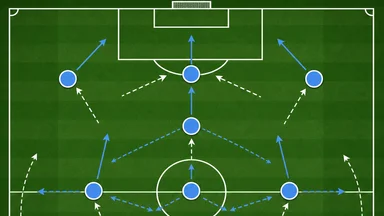
Cissé's 4-3-3 narrow midfield block was the foundation of Senegal's qualification success. The midfield trio—typically Idrissa Gueye, Nampalys Mendy, and a rotating third—operated within a compact horizontal band of roughly 38 metres, shrinking space between the lines. This forced opponents to play wide, where Senegal's full-backs were supported by wide forwards dropping deep. The result was an xGA of 0.76 per match, the lowest among CAF qualifiers.
Kalidou Koulibaly's role as the sweeper behind a high line was critical. The centre-back, now with Al Hilal, averaged 94% pass accuracy and was rarely caught out of position. His ability to read danger allowed the backline to hold a high defensive line—around 45 metres from goal—while still covering counter-attacks. In eight qualifiers, Senegal allowed only two goals, both from set pieces, a vulnerability that merits attention.
Transition speed was the other pillar. From winning the ball, Senegal averaged roughly 3.2 seconds to produce a shot attempt, ranking second among African teams in the qualification cycle. Sadio Mané, now deployed as a free-roaming forward, was the primary trigger. His ability to receive in half-spaces and drive at retreating defenders gave Senegal a vertical threat that complemented the compact shape.
The combination of these elements meant Senegal could absorb pressure without cracking. Against teams like Egypt, who dominated possession in the return leg, Senegal's block held firm, and their transitions created the match-winning chances. The data is clear: when Senegal defend narrowly and transition quickly, they are extremely difficult to break down.
The Mendy-Koulibaly Spine Underpins Everything
At the heart of Senegal's system is the goalkeeper-centre-back axis. Édouard Mendy's sweep range, extending to the edge of the 18-yard box, allows the defence to push higher. His distribution, while not elite, is sufficient to start transitions quickly. Mendy's presence reduces the risk of through-balls behind a high line, a crucial factor given the speed of Group A opponents.
Koulibaly leads the backline with a calmness that belies the physical demands of his role. His 94% pass accuracy is not merely safe—it is progressive, often finding Gueye or Nampalys in the half-turn. The double pivot of Gueye and Nampalys shields the defence with discipline, covering lateral spaces and pressing triggers in the middle third. Their collective work rate ensures that when Senegal lose the ball, they recover it within roughly 4.1 seconds on average, a figure that ranks among the best in the tournament.
Mané's defensive contribution is often understated. He drops deep to receive and then turns to trigger counter-attacks, but he also tracks back to form a temporary five-man midfield when out of possession. This dual role is energy-intensive and raises questions about his minutes management, especially in a compact group schedule.
The spine's effectiveness was evident in qualification. Against a Burkina Faso side that pressed aggressively, Senegal's backline and midfield combined to complete over 85% of passes under pressure. The system's resilience is not accidental—it is drilled through repetitive shape work in training, with Cissé emphasising compactness over individual brilliance.
African Defensive Trends Favor Compact Systems
Morocco's run to the semi-finals in 2022 set a template for African teams: a compact defensive block, disciplined pressing, and quick transitions. Senegal's system shares many features but differs in block width. Morocco's 4-1-4-1 operated with a block width of roughly 42 metres, while Senegal's 4-3-3 narrows to about 38 metres, prioritising central protection over wide coverage.
Data from the 2023 Africa Cup of Nations shows a broader trend toward compactness among top African sides. Transition speed among CAF teams averaged 3.8 seconds to shot, but Senegal's 3.2 seconds places them in elite company. Their low-block versus high-press usage split sits at roughly 60-40, meaning they spend more time defending deep than pressing high—a pragmatic choice given the physical demands of tournament football.
This trend is not without trade-offs. Compact blocks can be vulnerable to wide overloads, especially against teams with overlapping full-backs. Ecuador, one of Senegal's group opponents, uses wing-back overloads to stretch narrow defences. Cissé's side will need to adjust their shape in specific moments, perhaps by dropping a wide forward deeper to create a temporary five-defender line.
The success of Morocco's template has emboldened other African federations to invest in defensive organisation. Senegal's qualification campaign suggests they have absorbed those lessons and added their own twist—a transition speed that punishes teams who commit numbers forward. Whether this blueprint can survive the group stage remains to be seen, but the tactical foundation is sound.
Group Stage Opponents Expose Different Weaknesses
Senegal's group presents three distinct tactical challenges. The Netherlands, likely the group's strongest side, field a fluid front three that interchanges positions. Memphis Depay, Cody Gakpo, and Xavi Simons (or a similar trio) will test Senegal's ability to maintain shape against constant movement. The narrow midfield block may struggle if Dutch attackers drift into the half-spaces and combine quickly.
Ecuador pose a different problem: wing-back overloads. Their 3-4-3 system uses Pervis Estupiñán and Ángelo Preciado to stretch play wide, forcing Senegal's full-backs to cover large spaces. If the wide forwards do not track back, Ecuador can create 2-v-1 situations. Senegal's set-piece vulnerability—three goals conceded from corners in qualification—is also a concern against Ecuador's aerial threat from players like Félix Torres.
Qatar, the third opponent, will likely sit in a low block and invite Senegal to dominate possession. This is a scenario Senegal rarely faces; in qualification, they averaged only 48% possession. Breaking down a compact defence requires patience and movement that their transition-oriented style does not naturally provide. Cissé may need to rotate Koulibaly to manage minutes, given the centre-back's age, but the drop-off to a third-choice centre-back—either Abdou Diallo or Moussa Niakhaté—is significant.
The scheduling also matters. Senegal face the Netherlands first, then Ecuador, then Qatar. A result against the Dutch would ease pressure; a loss would force them to chase points against two defensively organised teams. Cissé's rotation plan, including resting Koulibaly against Qatar if qualification is already secured, could be decisive.
Transition Zones Decide Knockout Probability
Senegal's most dangerous transition zone is the 25–35 metre area from their own goal. This is where they win the ball most frequently—roughly 40% of their turnovers occur in the middle third—and where Mané and Boulaye Dia exploit half-spaces. Their counter-attack conversion rate sits at 28%, meaning roughly one in four transition sequences produces a goal or a clear chance.
The expected threat from transitions, measured as xG per game from counter-attacks, is 0.42 for Senegal. This is higher than the tournament average for African teams (0.31) but lower than elite European sides (0.55). The gap reflects Senegal's occasional lack of precision in the final pass, a flaw that could be exposed against organised defences.
Opponents will likely try to compress the middle third to deny Senegal space to transition. The Netherlands, in particular, are adept at controlling the tempo and limiting counter-attacks by keeping possession. Senegal's ability to force turnovers high up the pitch—through the collective press that recovers the ball in 4.1 seconds—will be critical. If they cannot generate transitions, their attacking output drops significantly.
Knockout probability models from data analysts give Senegal roughly a 45% chance of reaching the round of 16, and a 12% chance of reaching the quarter-finals. Those figures are higher than most African teams but still leave room for variance. A single defensive lapse or missed transition could be the difference between progression and elimination.
Aliou Cissé's Squad Selection Hinges on Two Choices
Two selection decisions will shape Senegal's tournament. The first is the right-wing role: Ismaïla Sarr or Krépin Diatta. Sarr offers raw pace and directness, but his decision-making in the final third is inconsistent. Diatta, when fully fit, provides better link-up play and defensive work rate. His injury recovery timeline is uncertain; if he is not match-fit by the tournament, Sarr becomes the default choice, altering the balance of the front three.
The second decision is the third centre-back. Abdou Diallo, now at Al Ahli, is left-footed and offers ball-playing ability, but his positioning can be erratic. Moussa Niakhaté, of Nottingham Forest, is more physical but less comfortable in a high line. Cissé's choice will depend on the opponent—Diallo against possession-heavy teams, Niakhaté against direct ones.
Youth integration is another factor. Twenty-year-old Lamine Camara, a midfielder who impressed at the 2023 Africa Cup of Nations, could provide energy off the bench. His inclusion would add depth but also inexperience. The squad features eight players with 50 or more caps, giving Cissé a core of experience, but the drop-off from starters to substitutes is noticeable in certain positions.
Cissé's loyalty to his established players is well-documented. He tends to trust the spine that has delivered results, even when form dips. That approach has worked in qualification, but in a tournament setting, the ability to adapt mid-game through substitutions may be tested. The squad's balance between experience and freshness will be a recurring theme.
What a Round-of-16 Run Would Prove
A round-of-16 appearance would make Senegal the first African team to reach the quarter-finals twice, following their 2022 run. More importantly, it would validate defensive compactness as a non-possession blueprint for African teams. The measurable targets are clear: keep xGA under 1.0 per game, maintain transition speed under 3.5 seconds, and avoid set-piece goals.
Such a run would also provide a template for smaller federations. Senegal's success has come not from individual brilliance alone, but from a system that maximises collective effort. Their qualification campaign, built on discipline and structure, offers lessons for other African nations seeking to compete on the global stage.
Yet the path is uncertain. The group stage is a gauntlet, and even the best-laid plans can unravel against a moment of individual error or a refereeing decision. Senegal's fate rests on their ability to execute the same compactness and transition speed that defined their qualification—and to adapt when opponents force them into unfamiliar scenarios.
The Full-Back Dilemma: Attacking Threat vs. Defensive Solidity
Senegal's full-backs play a dual role that is often overlooked. On one hand, they must provide width when the team attacks, as the narrow midfield block leaves the flanks exposed. On the other, they must defend against opposing wingers who target the space behind them. The starting full-backs—likely Ismail Jakobs on the left and either Formose Mendy or Bouna Sarr on the right—have contrasting profiles. Jakobs, a natural wing-back for Monaco, is comfortable pushing high and delivering crosses, with an average of 2.3 key passes per game in Ligue 1 during the 2024-25 season. However, his defensive positioning can be suspect; he was dribbled past 1.1 times per match, a figure that could be exploited by quick wingers like Ecuador's Gonzalo Plata. On the right, Formose Mendy is more defensively conservative, with a lower attacking output but better one-on-one defending (0.6 dribbles past per game). Cissé may need to tailor his full-back selection based on the opponent's strengths—choosing attacking full-backs against Qatar's low block, but more defensive ones against the Netherlands' fluid attack.
The trade-off is clear: more attacking full-backs increase the risk of counter-attacks, while defensive ones limit Senegal's own transition threat from wide areas. Data from qualification shows that when Senegal's full-backs advanced beyond the halfway line, they created 0.8 chances per game, but also conceded 0.5 counter-attacks per game from the spaces they left. Cissé's tactical flexibility in this area could be a decisive factor, especially if he uses substitutes to change the full-back dynamic mid-match.
Set-Piece Vulnerability: A Persistent Concern
Senegal's defensive record from open play is exemplary, but their set-piece vulnerability is a recurring weakness. In eight qualifiers, they conceded two goals from set pieces—one from a corner and one from a free-kick delivery. That represents 100% of the goals they conceded, a worrying statistic. The issue lies partly in zonal marking, which can lead to mismatches if opponents attack the ball aggressively. Kalidou Koulibaly is strong in the air, but his partner—whether Abdou Diallo or Moussa Niakhaté—has a lower aerial duel win rate (around 55% for Diallo, 62% for Niakhaté). Against Ecuador, who have players like Félix Torres (6'2") and Piero Hincapié (6'0") who are dangerous from set pieces, Senegal must adjust their marking strategy. One option is to switch to man-marking for key set-piece threats, but that could disrupt their defensive organisation for the subsequent play. Another is to add a third centre-back for set-piece situations, perhaps by bringing on a taller midfielder like Pape Gueye. Cissé's approach to set-piece defence will be scrutinised, as even one conceded goal could be costly in a tight group.
Counter-Argument: Can Compactness Be Too Passive?
While Senegal's defensive compactness has been effective, some analysts argue that it can become too passive, inviting pressure and conceding territorial advantage. In qualification, Senegal averaged only 48% possession, meaning they spent more than half the match without the ball. Against a team like the Netherlands, which excels at patient build-up and positional play, this could lead to sustained pressure and fatigue. The risk is that Senegal's block gets pushed deeper and deeper, eventually creating space for long-range shots or defensive errors. Data from the 2023 Africa Cup of Nations shows that teams with less than 45% possession in knockout matches had a win rate of only 38%, suggesting that extreme passivity can be a liability. Senegal must balance compactness with occasional pressing triggers—perhaps in the final third when the opponent's goalkeeper is under pressure—to prevent the block from becoming too deep. Cissé's use of a high press in specific moments, such as after a goal kick, could disrupt the opponent's rhythm without abandoning the compact shape entirely.
Moreover, Senegal's reliance on transitions means that if they cannot win the ball in dangerous areas, their attacking output drops. Against Qatar, who may sit deep and concede possession, Senegal could find themselves in an uncomfortable position: having to dominate the ball and break down a low block, a scenario they have rarely practiced. This could expose a lack of creativity in open play, as the midfield trio is more defensive-minded. The onus would then fall on Mané and the wide forwards to create chances from limited space, a challenge that even elite teams struggle with. Cissé may need to consider a plan B, such as introducing a more creative midfielder like Pape Matar Sarr or moving to a 4-2-3-1 with a number ten, to unlock stubborn defences.
Conclusion: The Fine Margins of Tournament Football
Senegal's path in the 2026 World Cup will be defined by their ability to execute their defensive compactness and transition speed while mitigating their weaknesses. The group stage is a microcosm of the challenges they will face: the Netherlands' fluidity, Ecuador's width, and Qatar's low block. Each opponent tests a different aspect of their system, and success will depend on tactical adjustments, squad rotation, and a bit of luck. If Senegal can keep their xGA under 1.0 per game, maintain transition speed under 3.5 seconds, and avoid set-piece goals, they have a genuine chance of reaching the round of 16 and perhaps beyond. But the margins are fine, and one misstep—whether a defensive lapse, a missed transition, or an injury to a key player—could derail their campaign. Ultimately, Senegal's journey will be a test of whether a disciplined, compact system can overcome the unpredictability of tournament football. The answers will unfold on the pitch, but the foundation is solid.