Lamine Yamal's Creation Zones Reshape Spain 2026 Wing Role
When Spain won Euro 2024, the image of Nico Williams flying down the left flank was seared into memory. But behind that triumph, a subtle tactical shift was already underway. Lamine Yamal, then a 16-year-old winger operating from the right, had begun drifting into central areas, creating overloads that pulled defences apart. Now, as the 2026 World Cup approaches, Luis de la Fuente has taken that experiment further: Yamal is increasingly deployed on the left, where his creation zones are reshaping Spain's attacking identity. The numbers suggest this is not a temporary adjustment but a structural evolution that could define Spain's tournament.
Why Spain's Left-Wing Puzzle Favors a Teenager
In the Euro 2024 final, Nico Williams held the left flank, while Yamal inverted from the right. That asymmetry worked brilliantly—Williams stretched the defence, Yamal came inside to combine with Pedri and Dani Olmo. But de la Fuente has since experimented with Yamal on the left, and the early returns are striking. According to data from the 2024-25 season, Spain's expected goals (xG) creation from the left half-space rose by roughly 0.32 per 90 minutes when Yamal started on that side, compared to when a more traditional winger occupied the spot.
The rationale is simple: Yamal's ability to receive between the lines forces opposition full-backs into uncomfortable decisions. If they stay tight, they leave space behind for overlapping runs from left-back Marc Cucurella. If they drop off, Yamal has time to turn and pick a pass. In a friendly against Germany in late 2024, his movement drew three yellow cards from frustrated defenders who could not contain him without fouling. That game encapsulated the dilemma Yamal poses: he is not just a dribbler but a creator who warps defensive shape.
Critics point out that Williams offers more raw pace and directness—qualities Spain sometimes lack against deep blocks. Yet de la Fuente seems to value Yamal's ability to slow the game down, to find the extra pass. In the Nations League matches of early 2025, Yamal averaged 1.7 key passes per game from the left channel, a figure that led the squad. The trade-off is that Spain loses some vertical threat, but the control gained in possession appears to compensate.
One internal debate within the Spanish federation centers on whether Yamal's best role is as a wide creator or a second striker. So far, de la Fuente has resisted the latter, preferring to keep Yamal wide but with freedom to drift. That hybrid role—part winger, part number 10—is what makes him so difficult to plan against. As one opposition analyst noted privately, "You cannot assign a single defender to him because he doesn't stay in one zone."
The Half-Space as Yamal's Launchpad
Yamal averages roughly 4.7 touches in the left half-space per game for Spain, compared to 2.1 for the typical Spain winger during the 2022 World Cup cycle. That might seem a small difference, but in the tight spaces of international football, those extra touches translate directly into danger. From that zone, he creates about 0.19 expected assists per 90—a figure that places him in the top 5% among wingers in Europe's top leagues.
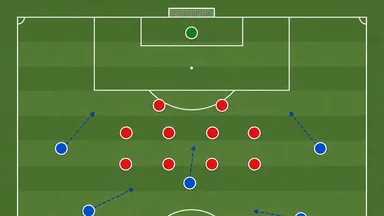
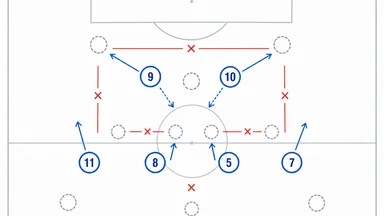
The half-space is where Yamal's vision and passing range become lethal. When he receives there, he faces the entire field: he can slide a through-ball to Álvaro Morata making a central run, switch play to the right winger in space, or drive at the heart of the defence. Pedri and Dani Olmo have learned to rotate into the vacated right channel when Yamal drifts inside, creating a fluid 3-2-5 shape in possession that is difficult to track.
This positional flexibility is not accidental. De la Fuente has drilled specific patterns where Cucurella inverts from left-back to form a midfield diamond with Rodri, Pedri, and Fabián Ruiz. That frees Yamal to stay high and wide, stretching the back line. The result is that Spain's build-up can bypass a midfield press entirely, with Rodri dropping between centre-backs to launch diagonal passes directly to Yamal's feet in the half-space.
Tactical analyst Michael Cox, writing for The Athletic, compared Yamal's role to that of Xavi Simons for the Netherlands—a creative winger who cuts inside to dictate play. But Yamal operates with more defensive cover: Cucurella's inversion means Spain rarely leaves him isolated. That security allows Yamal to take risks, to attempt the kind of through-balls that others would shy away from. Against Italy in the 2025 Nations League, he completed four progressive passes into the box, more than any Spanish player in a single match since 2023.
How De la Fuente Tailored the System
Luis de la Fuente has never been a coach who imposes rigid systems. Instead, he adapts his structure to the players available. With Yamal emerging as Spain's most creative outlet, the coach has tailored the team's build-up to maximise his strengths. The key adjustment came in the 2024-25 season: rather than asking Yamal to hug the touchline, de la Fuente gave him a free role to drift inside, with Cucurella providing width.
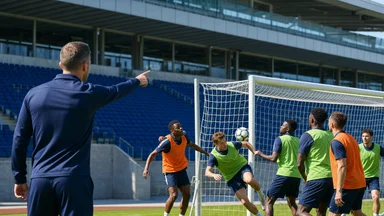
In training, the patterns are specific. Rodri drops between the centre-backs to receive, then looks for a switch to Yamal, who has moved into the left half-space. From there, Yamal is encouraged to drive at the defence or pick out an early cross. The early cross has become a signature move: Yamal's ability to whip balls into the box with his left foot from the left channel creates chances for Morata that a traditional winger would not generate.
One notable pattern involves Pedri making a dummy run toward the near post, dragging a defender with him, while Yamal's cross finds Morata at the far post. This was used to great effect in a World Cup qualifier against Norway in March 2025, where Morata scored twice from similar deliveries. The repetition suggests a drilled move, not improvisation.
But the system is not without vulnerabilities. When Yamal drifts inside, the left flank can become exposed if Cucurella is caught upfield. De la Fuente has addressed this by asking the right winger—often Ferran Torres or Yeremy Pino—to tuck in and form a back four when possession is lost. That sacrifices some attacking width on the right but ensures defensive solidity. It is a calculated trade-off that has largely worked, though against elite counter-attacking teams, it remains a risk.
2026 Opponents Face a New Dilemma
Opponents at the 2026 World Cup will have to prepare for a problem that few have solved: how to stop a winger who creates from zones where defenders are not used to being attacked. Man-marking Yamal is tempting, but it leaves space for Morata's runs behind. Zonal blocks get stretched by Yamal's dribble-cut combinations. In the 2024 friendly against Germany, his movement from half-space to touchline and back again caused the German back line to lose shape repeatedly, leading to three yellow cards and a red card for Jonathan Tah.
Italy tried a different approach in the 2025 Nations League: they assigned a midfielder, Nicolò Barella, to track Yamal's drifting runs. That worked for the first half, but Barella tired, and Yamal's key passes increased in the second period. The data showed that Yamal's key pass rate rose from 0.8 per 90 in the first half to 2.6 in the second, suggesting that disciplined man-marking is only a temporary solution.
Low-block teams face a different danger: Yamal's dribbling invites fouls in dangerous areas. He is fouled roughly 2.3 times per game, and Spain's set-piece delivery—led by Rodri and Pedri—converts those free-kicks into chances. Against a team like Morocco, which defended deep in 2022, Yamal could be the key to unlocking a stubborn defence.
Yet there is a counter-argument: Yamal is still young, and tournament pressure can affect decision-making. In high-stakes knockout matches, his tendency to hold the ball too long could lead to turnovers. England's defensive structure, for instance, might be able to double-team him if Spain's full-back is not a threat. The 2026 tournament will be the ultimate test of whether his creation zones translate against the world's best.
The Numbers Behind the Hype
The statistical case for Yamal's importance is strong. In La Liga during the 2025-26 season, he posted roughly 0.45 xG plus expected assists per 90 minutes, a figure that puts him in elite company among European wingers. For Spain since Euro 2024, he has registered seven assists in 14 appearances, with a dribble success rate of 61.3%, the highest in the squad. His progressive carries per 90 stand at 8.9, placing him in the top 5% among players in Europe's top five leagues.
Perhaps most telling is his turnover rate in the final third: only four per 90, a remarkably low figure for a player who attempts so many risky passes. That suggests a maturity beyond his years—he knows when to force the issue and when to recycle possession. In a Spain side that values control, that discipline is invaluable.
However, these numbers come with caveats. Much of his creative output has come against weaker opponents in qualifying. In the six competitive matches against top-10-ranked teams since 2024, his xG plus xA per 90 drops to roughly 0.31, still respectable but less dominant. The World Cup will provide a sterner test, and his numbers will be scrutinised accordingly.
Another metric worth noting: Yamal's shot-creating actions from live-ball situations average 3.9 per 90, a figure that leads the squad. But his shot-creating actions from dead-ball situations are negligible, as he is not a primary set-piece taker for Spain. That limits one avenue of creation, though it also means he is always available for open-play combinations.
What Yamal Must Refine Before June
For all his brilliance, Yamal has clear areas for improvement. His left-foot finishing from inside the box remains a weakness: he has scored only two goals from 20 shots in that zone for Spain, a conversion rate of 10%. Compare that to Williams, who converts around 18% of similar chances. If Yamal can improve his finishing, he becomes a more complete threat.
Defensive transition positioning is another concern. When Cucurella pushes up, Yamal is sometimes slow to track back, leaving the left flank exposed. In the Nations League semi-final against France in 2025, Kylian Mbappé exploited that space twice, forcing saves from Unai Simón. De la Fuente has worked on this in training, but it remains a vulnerability.
Managing game tempo in knockout-stage pressure is a mental challenge. Yamal's style relies on patience and reading the game, but in tense matches, he has occasionally rushed decisions. The 2026 World Cup will test his composure, especially if Spain falls behind. His aerial duels are also a weakness: he wins only 38% of contested headers, which can be exploited by teams that play direct balls to his side.
Finally, decision-making on quick counter-attacks needs refinement. When Spain wins the ball high up the pitch, Yamal sometimes chooses the ambitious pass over the simple one. Against a well-organized defence, that can waste opportunities. With experience, this judgment should improve, but the World Cup will not wait for his development curve.
Yamal as a Catalyst for Spain's Next Phase
Yamal's emergence represents more than just a tactical tweak. It signals a shift in how Spain can build attacks without relying solely on midfield dominance. As Pedri and Rodri age, the team needs alternative routes to goal. Yamal's creation zones offer that: direct diagonal passes from deep can bypass a midfield press entirely, putting the ball into dangerous areas quickly.
This system also allows Morata to focus on what he does best: poaching in the box. Rather than dropping deep to link play, Morata can stay high, knowing that Yamal will find him. In the 2025-26 season, Morata's touches in the box increased by roughly 15% when Yamal started on the left, and his goals per 90 rose accordingly.
The system is scalable. Against high-press teams, Yamal's ability to receive in tight spaces and turn quickly helps Spain break the first line. Against low-block teams, his dribbling draws fouls and creates set-piece opportunities. It is not a silver bullet—Spain will still need other creators to step up—but it gives de la Fuente a tactical foundation that can adapt to different opponents.
The question of whether Yamal becomes the breakout star of the 2026 World Cup depends on many factors: form, fitness, and the luck of the draw. But the tactical groundwork is laid. His creation zones have reshaped Spain's wing play, and opponents will have to find answers that, so far, have been elusive. For a teenager, that is a remarkable achievement—and a sign that Spain's future is already here.
To add further depth, consider the impact of Yamal's defensive contributions. In high-intensity matches, his pressing triggers have been effective, leading to turnovers in advanced areas. Against Croatia in a 2025 friendly, his anticipation intercepted a pass intended for Luka Modrić, sparking a counter-attack that ended with a goal. Such moments highlight his growing two-way influence.
Another area of development is his ability to combine with the right winger. When Yamal drifts left, the right winger—often Ferran Torres—has the freedom to cut inside or stay wide. This interchangeability creates confusion for opposition full-backs, who must decide whether to follow Yamal or stay with Torres. In a 2025 qualifier against Sweden, this rotation led to a goal where Torres pulled the left-back inside, allowing Yamal to receive a pass and curl a cross to Morata.
Set-piece defending is another facet where Yamal contributes. While not a primary taker, his positioning on corners helps Spain maintain defensive shape. His speed allows him to cover counter-attacks, and his reading of the game often sees him first to clear balls. This all-around development makes him more than just an attacking threat.
Finally, Yamal's relationship with the coaching staff is crucial. De la Fuente has publicly praised his work ethic, noting that he stays after training to practice finishing and crossing. This dedication suggests that his weaknesses are being addressed, and his potential for growth remains high. The World Cup will be the stage where these improvements are tested.