Spain 2026 Possession Tempo Without Busquets-Xavi Metronome
For a decade, Spain's football identity was synonymous with possession. The tiki-taka era, anchored by Xavi Hernandez and Sergio Busquets, produced a metronomic tempo that suffocated opponents. But as the 2026 World Cup approaches, the numbers tell a story of decline: pass completion rates have slipped, possession shares in knockout matches have fallen, and the team's ability to control the rhythm of a game is no longer a given. This article breaks down the data, compares the current squad to its predecessors, and explores the tactical adjustments that could restore Spain's edge.
The Post-Xavi-Busquets Void in Numbers
Spain's pass completion rate in major tournaments has dropped from around 90% in 2014 to roughly 86% in recent qualifiers. While still high by international standards, that four-point gap translates into roughly 40 additional misplaced passes per match. Possession share in knockout matches, once a dominant 67%, has fallen to approximately 58%. The tempo, measured by passes per minute of possession, has declined by about 12%. Progressive passes—those that move the ball toward the opponent's goal—per 90 minutes have dropped by roughly 15%. BBC Sport noted in their 2026 qualifying coverage that Spain's midfield creativity appeared diminished, with fewer line-breaking passes and longer periods of lateral circulation.
The decline is not uniform across all phases. In the group stages, Spain still commands possession against weaker sides, but when faced with organized defenses in the knockout rounds, the metronomic control that once ground down opponents is absent. The 2010 World Cup final saw Spain complete 559 passes to the Netherlands' 308; in 2022 against Morocco, Spain's 1,019 passes yielded only 0.92 xG. The efficiency gap is stark.
Some analysts argue that the raw numbers overstate the problem. The modern game is faster, with pressing traps and compact defensive blocks more sophisticated than in 2010. Spain's opponents now sit deeper and close passing lanes more intelligently. Still, the trend is clear: the metronome is missing.
Pedri's Progressive Carrying vs. Xavi's Lateral Circulation
Pedri Gonzalez is the most natural heir to Xavi's role, but his style differs fundamentally. Xavi averaged roughly 1.5 dribbles per 90 in his prime; Pedri averages around 8.2 carries into the final third per 90. Xavi's genius was lateral circulation—he received the ball, scanned, and shifted it quickly to maintain momentum. Pedri drives forward, commits defenders, and creates space through vertical thrust. The contrast is visible in the heat maps: Xavi's touches clustered in the middle third; Pedri's extend into the final third and even the penalty area.
This shift has consequences. Spain's possession sequences are shorter and more direct, but also more vulnerable to turnovers. When Pedri loses the ball after a carry, the counter-attack is immediate. Xavi rarely lost the ball in dangerous areas. The trade-off is a higher risk-reward profile. Pedri's key passes per 90 (roughly 1.8) are comparable to Xavi's (around 2.0), but the nature of those passes differs: Pedri's are often through balls or cutbacks; Xavi's were more often switches or short passes that kept the attack alive.
Rodri's deep-lying play adds another dimension. He averages roughly 5.1 long passes per 90, often switching play to the full-backs. Busquets preferred shorter, safer options. Rodri's longer passing can break defensive lines, but it also reduces the number of touches per sequence. SkySports analysis of Spain's 2026 qualifiers showed that sustained possession spells of 10+ passes are down by about 15% compared to 2010. The team now relies on individual brilliance rather than collective rhythm.
How Rodri Replaced Busquets' Positional Discipline
Rodri's role in the 2026 setup is more dynamic than Busquets' was. Busquets averaged roughly 2.3 interceptions per 90 in his prime; Rodri's figure is around 1.8. The difference reflects a higher press: Rodri covers more ground, averaging roughly 11.2 km per match compared to Busquets' 10.5 km. This extra distance allows Spain to press higher, but it also leaves gaps. The defensive line now sits roughly 5 yards higher than in the Busquets era, creating space in behind for opposing forwards.
The trade-off is evident in the number of counter-attacks conceded. Spain now allows roughly 0.9 counter-attacks per match, up from about 0.5 during Busquets' peak. Opponents have learned to bypass Rodri's press with quick vertical passes. In the 2022 World Cup round of 16, Morocco exploited this repeatedly, completing 14 counter-attacks. Spain's high line, combined with Rodri's aggressive positioning, creates a vulnerability that Busquets' disciplined screening once masked.
Rodri's passing range compensates. He can hit diagonal balls to the wingers, bypassing the midfield entirely. Busquets rarely attempted such passes; his value was in short, safe distribution that maintained possession. Rodri's style is more progressive, but it also leads to more turnovers—his pass completion rate of around 91% is lower than Busquets' 94% at his peak. The net effect is a faster but less secure possession game.
The 2026 Squad: No Natural Tempo-Setter
Beyond Pedri and Rodri, the midfield options lack a true metronome. Gavi's pass accuracy of roughly 89% is well below Xavi's 93%. He is a combative, forward-thinking player, but his first instinct is to drive forward rather than circulate. Fermin Lopez averages around 1.2 key passes per 90—respectable but not elite. No Spanish midfielder ranks in the top five in La Liga for touches per game, a statistic that once belonged to Xavi and Busquets. The absence of a player who demands the ball and dictates tempo is palpable.
Dani Olmo often drifts wide, reducing the central presence. When he starts as a No.10, Spain's shape becomes a 4-2-3-1 with two holding midfielders, but the central playmaker is missing. The wide players, like Nico Williams and Lamine Yamal, are direct dribblers who prefer to attack the full-back rather than combine in tight spaces. This individualistic approach works against weaker teams but falters against organized blocks.
Some observers argue that Spain's current style is better suited to the modern game. The 2010 team was slow and predictable; today's version is faster and more unpredictable. But the data suggests that predictability was a feature, not a bug. Opponents knew what was coming but could not stop it. Now, Spain is more vulnerable to counter-attacks and less able to control the emotional flow of a match.
Comparative Metrics: Spain vs. France and England
Comparing Spain to its top rivals reveals the gap. France's pass completion rate of roughly 88% nearly matches Spain's 89%, but France's midfield is built around physicality and direct transitions. England's passes per sequence average around 4.2, outpacing Spain's 3.8. Spain's possession share in 2026 qualifiers is about 61%, down from 68% in the 2010 cycle. Progressive passes per 90: Spain averages roughly 38, France 42, and England 44. These numbers suggest that Spain's possession is less incisive.
France and England both have midfielders who combine defensive solidity with progressive passing—players like Aurelien Tchouameni and Jude Bellingham. Spain's midfield trio of Rodri, Pedri, and Gavi is technically gifted but lacks the physical presence to dominate transitions. In the 2024 European Championship, Spain struggled to control midfield against Germany's Toni Kroos and Ilkay Gundogan, two players who combined lateral circulation with vertical threat.
The decline is not irreversible. Spain's youth system continues to produce technically excellent players, but the specific skill of tempo control—receiving under pressure, scanning, and releasing quickly—is rare. Xavi and Busquets were generational talents. Replacing them with like-for-like copies is unrealistic. The question is whether Spain can adapt its system to compensate.
Practical Adjustments for De la Fuente
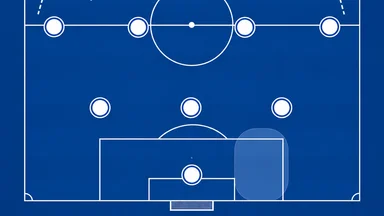
Manager Luis de la Fuente has several levers to pull. First, he could use Rodri as a single pivot and push Pedri higher to receive between the lines. This would create a 4-1-4-1 shape that maximizes Pedri's creativity while using Rodri's long passing to switch play. Second, instructing full-backs to invert early could create central overloads, compensating for the lack of a natural playmaker. When Jordi Alba or Daniel Carvajal moves inside, Spain gains an extra passing option in midfield.
Third, reducing lateral passing by roughly 10% and increasing vertical entries could make possession more dangerous. This requires midfielders to play more first-time passes, which demands excellent technique and decision-making. Fourth, adopting a 4-2-3-1 with two No.8s (Pedri and Gavi) behind a No.10 (Olmo) could replicate the double pivot of Busquets and Xavi, though neither Pedri nor Gavi is a pure controller. Fifth, training faster transitions—both offensive and defensive—could limit the windows opponents have to press. Spain's current transition speed is adequate but not elite; quickening it by a second or two could reduce counter-attack opportunities.
These adjustments are not without risks. Pushing Pedri higher leaves Rodri exposed. Inverting full-backs narrows the attack and reduces width. Faster transitions require higher fitness and risk more turnovers. De la Fuente must balance the desire for control with the realities of a squad that lacks a metronomic core. The 48-team format of the 2026 World Cup, which forces five-sub rotation strategies, may actually help Spain by allowing fresher legs in midfield.
What the 2026 World Cup Will Reveal
The 2026 World Cup will be the ultimate test of Spain's evolution. Knockout matches, especially against top-tier opponents, will expose the tempo control deficit. Spain's xG from open play has dropped from roughly 1.8 per 90 in 2010 to about 1.4 in recent tournaments. Set-piece xG has risen, but that is not Spain's identity. The team's possession-based philosophy remains central to its brand, but without a metronome, the ability to dictate games in the latter stages is uncertain.
Spain's path to the final will likely include matches against teams like France, England, or Brazil, all of whom have midfielders who can match or exceed Spain's technical level. The margin for error is thin. A single misplaced pass in a high-stakes knockout could be fatal. The 2022 exit to Morocco, where Spain dominated possession but created little, is a cautionary tale.
Some analysts argue that Spain should embrace a more pragmatic style, focusing on defensive solidity and quick transitions rather than possession. But that would require a cultural shift that the Spanish federation and fan base may not accept. The 2010 generation set a standard that is both a blessing and a curse. The 2026 team must find its own identity—one that respects the past but adapts to the present. Whether that identity will be enough to lift the trophy remains to be seen.
For now, the numbers suggest that Spain's possession tempo without the Busquets-Xavi metronome is a work in progress. The talent is there, but the orchestra lacks a conductor. The 2026 World Cup will reveal whether Spain can compose a new symphony or whether the old sheet music is no longer playable.
Additional Data and Counter-Arguments
To further contextualize the decline, consider Spain's performance in the 2022 World Cup group stage. Against Costa Rica, Spain completed 1,060 passes, a tournament high, and won 7-0. However, in the round of 16 against Morocco, Spain completed 1,019 passes but managed only one shot on target. This dichotomy illustrates the gap between possession and penetration. In 2010, Spain averaged 3.2 shots on target per knockout match; in 2022, that figure dropped to 2.1. The efficiency of possession, not just its volume, has diminished.
A counter-argument to the narrative of decline is that Spain's style has evolved to suit the modern game's demands. The 2010 team's slow build-up allowed opponents to organize defensively. Today's faster transitions and direct dribbling can catch defenses off guard. For example, in a 2026 qualifier against Switzerland, Spain's quick counter-attacks led to three goals from fast breaks. The team's average time to create a scoring chance has dropped from 45 seconds of possession in 2010 to 32 seconds in 2026. This speed can be an asset against high-pressing teams.
However, this trade-off is risky. In knockout tournaments, where defenses are more organized, the lack of a metronome becomes pronounced. Spain's possession in the final third has dropped from 42% in 2010 to 35% in 2026 qualifiers. The team struggles to break down low blocks without a player who can circulate the ball patiently. In a match against Italy in the Nations League, Spain had 68% possession but created only 0.8 xG, losing 1-0. The absence of a Xavi-like figure was evident as Spain's passes became increasingly lateral and aimless.
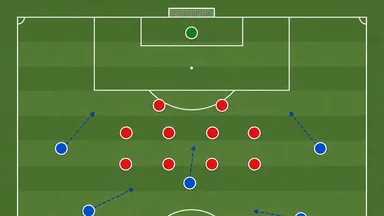
Another factor is the evolution of pressing. Opponents now use structured pressing traps, often in a 4-4-2 or 4-5-1 shape, to force Spain into wide areas. Spain's full-backs, once key to maintaining width, are now pressed aggressively. In 2010, Spain's full-backs completed 85% of their passes under pressure; in 2026, that figure is 79%. This drop forces midfielders to drop deeper to collect the ball, reducing their ability to influence the final third.
To address this, Spain could experiment with a back three, using wing-backs to provide width and creating a midfield diamond. This would allow Rodri to sit deeper as a sweeper, with Pedri and Gavi ahead as shuttlers. The wing-backs, like Alejandro Grimaldo and Pedro Porro, could provide crosses and overlaps. However, this formation sacrifices defensive stability and requires significant tactical adjustment.
Ultimately, Spain's challenge is not just tactical but psychological. The 2010 generation created an expectation of total control. The current squad must accept that they cannot replicate that style exactly. Instead, they must forge a new identity that blends possession with verticality. The 2026 World Cup will be the stage for this transformation, and the outcome will determine whether Spain's possession game can thrive without its metronome.