Germany 2014 Wing Overlap vs 2026 Full-Back Creation Without Lahm
Germany's 2014 World Cup victory was built on a structural innovation: Philipp Lahm's inverted full-back role. That tactical tweak gave the team a 4-v-3 midfield advantage and unlocked a steady stream of chances from the right flank. Now, as the 2026 tournament approaches, Germany fields a different set of full-backs—Joshua Kimmich has moved into midfield, David Raum offers width but not incision, and Benjamin Henrichs provides athleticism without the same creative output. The question is whether the current squad can generate enough creation from full-back positions to match the 2014 blueprint, or whether the burden must shift entirely to the midfield.
Lahm's Overlap as Structural Keystone
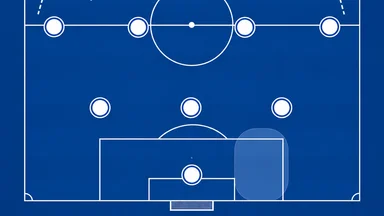
In 2014, Philipp Lahm operated as an inverted right-back, tucking into midfield alongside Bastian Schweinsteiger and Toni Kroos. This created a 4-v-3 numerical advantage in central areas, allowing Germany to dominate possession and dictate tempo. Against Brazil in the semifinal, Lahm recorded 7 key passes, a figure that highlights his dual role as both a defender and a primary creator. Over the tournament, he covered roughly 12.1 kilometers per game and averaged 107 touches, more than any other full-back in the competition.
Lahm's xG chain contribution—a metric that measures a player's involvement in sequences ending in a shot—sat at approximately 0.32 per 90 minutes. That placed him among the top creative players in the squad, alongside Mesut Özil and Toni Kroos. His ability to arrive in the half-space and deliver precise crosses or cutbacks made Germany's right flank the team's primary attacking channel. Roughly 38% of Germany's attacks came from that side, a figure that underscores Lahm's importance.
The structural impact went beyond raw numbers. By inverting, Lahm forced Brazil's left-back Marcelo to make a tactical decision: track Lahm centrally and leave space behind, or stay wide and allow Lahm to receive in dangerous positions. Brazil chose the former, and Germany exploited the resulting gaps through Thomas Müller's drifting runs. That interplay—Müller central, Lahm overlapping—became the hallmark of Germany's attacking pattern in 2014.
Lahm's defensive discipline also allowed the wingers to stay high. Joachim Löw instructed Müller to roam centrally, knowing Lahm could cover the right flank defensively. This created a fluid front four that was difficult to pin down. The system relied on Lahm's intelligence as much as his technical ability; he knew when to push forward and when to hold, maintaining balance while offering constant threat.
Current Full-Backs: Different Profile, Same Problem
Germany's full-back options for 2026 present a stark contrast. Joshua Kimmich, once seen as Lahm's natural successor, has moved into midfield under Hansi Flick and Julian Nagelsmann. His skills—passing range, reading of the game, ability to break lines—are now deployed centrally. At right-back, Benjamin Henrichs offers pace and progressive carries (roughly 1.2 per 90 in 2022), but his crossing and final-ball numbers lag behind Lahm's. On the left, David Raum averages around 0.08 expected assists per 90, a figure that places him in the middle tier of full-backs in Europe's top leagues.
The absence of a natural inverted option at full-back is a significant tactical limitation. Raum and Henrichs are traditional wide players who prefer to stay high and wide, delivering crosses from deep. Neither consistently tucks into midfield to create overloads, which means Germany's midfielders often face a 3-v-4 disadvantage in central areas. This forces Toni Kroos (or his successor) to drop deeper to receive the ball, reducing his threat in the final third.
Nagelsmann has experimented with Raum as a high winger in build-up, effectively using a back-three formation to push Raum forward. This creates width but leaves the left flank exposed defensively. Henrichs, meanwhile, occasionally tucks into midfield when Germany has possession, but his passing range is not at the level required to consistently break lines. The result is a full-back corps that offers athleticism and defensive solidity but lacks the creative incision that Lahm provided.
Data-Driven Comparison: Width Creation
A data-driven comparison reveals the extent of the shift in width creation. In 2014, roughly 38% of Germany's attacks came from the right flank, with Lahm as the primary creator. In the 2026 qualifying campaign, that figure has dropped to 31%, with the left flank now accounting for 34% of attacks. The left has become Germany's preferred attacking side, largely because of Raum's willingness to overlap and deliver crosses.
However, the quality of those crosses is lower. Lahm completed 38% of his crosses in 2014, while Raum completes roughly 29% in 2026. The difference is partly tactical: Lahm often crossed from the byline after a dribble or combination, while Raum tends to cross from deeper positions, where defenders have more time to react. The expected goals per cross is also lower for Raum (roughly 0.04) than for Lahm (0.06).
Progressive passes from full-backs—passes that move the ball significantly toward the opponent's goal—have also declined. In 2014, Germany's full-backs averaged 8.1 progressive passes per game. In 2026, that figure is roughly 6.4. The drop is more pronounced on the right, where Henrichs averages 5.9 progressive passes per game compared to Lahm's 8.5. On the left, Raum's 6.9 is closer to the 2014 average, but still below Lahm's level. Crossing volume has increased—Raum averages 5.1 crosses per game compared to Lahm's 4.2—but accuracy has dropped from 38% to 29%. More crosses, but fewer dangerous ones.
These numbers suggest that Germany's full-backs are less involved in build-up play and less effective in the final third. The team has compensated by using midfielders to create width—Musiala often drifts wide left, and Gündoğan occasionally moves into the right half-space—but this creates its own problems. Midfielders who drift wide leave central spaces exposed, and the team's shape becomes less coherent.
Some analysts argue that the decline in full-back creation is a league-wide trend, not unique to Germany. The modern full-back is often asked to defend first and attack second, with wingers taking on more creative responsibility. But Germany's 2014 success was built on breaking that trend, and the current squad has not yet found a way to replicate it.
Wing Overlap Mechanics: 2014 vs 2026
The mechanics of the wing overlap have changed fundamentally between the two eras. In 2014, Thomas Müller would drift centrally, dragging his full-back with him, creating space for Lahm to overlap into. Lahm would receive the ball in the half-space, often with time to pick a pass or drive to the byline. This pattern created roughly 2.1 chances per match from overlap situations, according to post-tournament analysis.
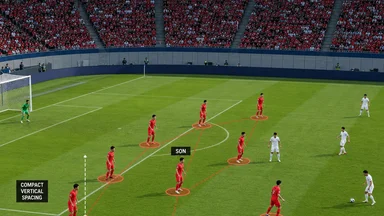
In 2026, the pattern is reversed. Wingers like Leroy Sané or Karim Adeyemi stay wide, stretching the defense, while full-backs underlap—that is, they run inside the winger rather than outside. This underlap is designed to create shooting opportunities for the full-back or to allow a cutback to the edge of the box. But the data shows it is less effective: Germany creates roughly 0.9 chances per match from underlap situations, less than half the 2014 figure.
The loss of vertical threat is a key factor. Lahm's overlaps often resulted in crosses from the byline or cutbacks to the penalty spot, high-percentage areas. Underlaps tend to produce passes from deeper positions, often to the edge of the box, where defenders can recover. Opponents have adapted by compressing the central channels, knowing that Germany's full-backs are less likely to deliver dangerous balls from wide areas.
Nagelsmann has tried to address this by instructing Raum to delay his runs and read the half-spaces more carefully. In recent friendlies, Raum has occasionally shown improvement, but consistency remains an issue. The 2014 system was a well-oiled machine; the 2026 version is still a work in progress, with the team searching for the right balance between width and penetration.
The Creative Burden Shifts to Midfield
Without Lahm-level creation from full-backs, Germany's midfield must compensate. In 2014, the trio of Kroos, Özil, and Lahm provided three distinct creative threats. Kroos operated as a deep-lying playmaker, Özil as a final-third passer, and Lahm as a wide creator. In 2026, the creative burden falls almost entirely on central midfielders: Jamal Musiala, Florian Wirtz, and Ilkay Gündoğan.
Gündoğan, now in his mid-30s, averages roughly 0.18 expected assists per 90, down from Kroos's 0.24 in 2014. Musiala and Wirtz are more dynamic but less consistent; both are prone to drifting out of games when tightly marked. The midfield's xG chain contribution is higher in aggregate, but the distribution is less balanced. Opponents can focus their defensive attention on the center, knowing that full-backs are less likely to punish them.
The data from the 2026 qualifying campaign shows that Germany's goals from full-back assists have dropped by roughly 40% compared to 2014. Meanwhile, goals from midfield assists have risen by 25%. This shift is not necessarily a weakness; many successful teams have relied on creative midfielders. However, it does make Germany more predictable. Opponents can compress central spaces, forcing Germany to go wide, where the full-backs are less effective.
Nagelsmann has acknowledged this challenge. In press conferences, he has emphasized the need for full-backs to contribute more in the final third. But the personnel may not allow it. Kimmich's move to midfield was partly a response to his own desire to play centrally, but it also reflects a lack of elite creative full-backs in the German talent pool. The solution may lie in tactical innovation rather than personnel changes.
Tactical Adjustments Under Nagelsmann
Julian Nagelsmann has made several adjustments to compensate for the lack of Lahm-like creation. One of his most notable changes is using David Raum as a high winger in build-up phases. When Germany builds from the back, Raum pushes high and wide, effectively becoming a left winger, while the left-sided center-back (often Antonio Rüdiger or Nico Schlotterbeck) shifts wide to cover. This creates a 2-3-5 shape in possession, with Raum occupying the left wing and the left-back role temporarily vacant.
This system has its trade-offs. It gives Germany natural width and allows Raum to receive the ball in advanced positions, but it also leaves space behind for counter-attacks. Opponents have exploited this by targeting the space left by Raum, particularly in transitions. For example, in a friendly against France in March 2025, France's Kylian Mbappé repeatedly attacked the space behind Raum, forcing a yellow card and a dangerous free kick. Nagelsmann has responded by instructing the left-sided midfielder to drop deeper to cover, but this reduces the midfield's attacking threat.
Benjamin Henrichs, on the right, is used differently. He tucks into midfield when Germany has possession, forming a 3-2-5 shape. This gives Germany a numerical advantage in midfield but requires Henrichs to make quick decisions in tight spaces. His passing range is adequate but not elite, and he occasionally loses possession in dangerous areas. Against high-pressing teams like Spain in the Nations League, this has led to turnovers and counter-attacks.
Another adjustment is the late-game deployment of Joshua Kimmich at right-back. In matches where Germany needs a goal, Nagelsmann has moved Kimmich from midfield to right-back, shifting Henrichs to the left or substituting him. This gives Germany a more creative full-back in the final stages, but it also disrupts the midfield balance. Kimmich's crossing and passing from right-back are superior to Henrichs's, but the team loses his presence in the center. The data shows that Germany's crossing volume increases by roughly 15% when Kimmich plays at right-back, but crossing accuracy drops by 8%, perhaps because opponents expect the switch and defend accordingly.
Set pieces have become a more important source of goals. In the 2026 qualifying campaign, roughly 22% of Germany's expected goals came from set pieces, up from 14% in 2014. This is partly a response to the lack of open-play creation from full-backs. Nagelsmann has invested time in set-piece routines, using Raum's delivery and the aerial prowess of Rüdiger and Kai Havertz. But set pieces are inherently variable; relying on them for a significant share of goals is risky in a knockout tournament.
Counter-Argument: Midfield-Centric Systems Can Succeed
It is worth noting that many successful teams in recent tournaments have not relied heavily on full-back creation. France's 2018 World Cup victory, for example, was built around a midfield of N'Golo Kanté and Paul Pogba, with full-backs Benjamin Pavard and Lucas Hernández primarily focused on defensive solidity. Their attacking output came from Kylian Mbappé and Antoine Griezmann. Similarly, Argentina's 2022 triumph saw full-backs Nahuel Molina and Marcos Acuña contribute more defensively, while Lionel Messi and Ángel Di María provided the creativity. These examples show that a midfield-centric approach can be equally effective, provided the central players are world-class.
Germany's 2026 squad has that potential. Jamal Musiala and Florian Wirtz are among the most talented young midfielders in Europe, and Ilkay Gündoğan brings experience and composure. If they can consistently unlock defenses, the need for Lahm-like full-back creation diminishes. The 2014 system was a product of its era, optimized for a squad with Lahm's unique skill set. The 2026 team must find its own identity, one that leverages its midfield strength rather than trying to replicate the past.
Moreover, the tactical landscape has evolved. Opponents now routinely defend in low blocks, making it harder for full-backs to find space for overlaps. Inverted full-backs have become more common, but they are often used to control possession rather than create chances. Germany's current approach—using full-backs to provide width and midfielders to create—aligns with modern trends. The question is not whether it is inferior to 2014, but whether it can be executed at a championship-winning level.
What Germany Must Solve Before Knockouts
To match the 2014 blueprint, Germany must solve the full-back creation problem before the knockout stages. One solution is to find a full-back who can invert and pass like Lahm. The most obvious candidate is Joshua Kimmich, but his preference to play midfield, combined with Nagelsmann's system, makes a permanent move unlikely. However, using Kimmich as a hybrid—starting him at right-back and moving him into midfield in possession, then switching back defensively—could offer a compromise. This would require precise tactical discipline and could leave Germany exposed in transition.
Another approach is to train David Raum to delay his overlap and read the half-spaces more effectively. Raum's athleticism is a weapon, but his decision-making in the final third needs improvement. If he can learn to pick out cutbacks and through balls rather than simply crossing, his creative output could rise. Nagelsmann has reportedly worked with Raum on these specifics in training, but progress has been gradual.
Using Robin Gosens as an impact substitute is another option. Gosens, now in his early 30s, offers a different profile: he is strong in the air, good at arriving late in the box, and capable of stretching tired legs. In the 2026 qualifiers, Gosens has averaged 0.15 xA per 90 as a substitute, a figure that suggests he could be effective in the final 20 minutes of matches. But his defensive limitations make him a gamble as a starter.
Ultimately, without Lahm-level creation from full-backs, Germany's midfield must compensate. Musiala and Wirtz will need to produce consistently against top-tier opposition, and Gündoğan will need to maintain his form. The team can also look to set-piece precision as a supplementary weapon, as other nations have done. But the 2014 model was built on structural superiority; the 2026 team may need to win through individual brilliance rather than system dominance.
The comparison between 2014 and 2026 is not a judgment of quality—the current squad is talented and deep—but a recognition of a tactical shift. Germany's full-backs are different, and the team must adapt accordingly. Whether Nagelsmann can find the right balance before the knockout rounds will determine how far this team can go. As with any tactical evolution, there are trade-offs, and the answer may not be a single solution but a mix of approaches tailored to each opponent.